
Oct 15, 2026
The Hakata question that looks like a typing mistake
打ち間違いに見える博多の疑問文
There is a sentence in Hakata that looks like a typing mistake and is an ordinary question.
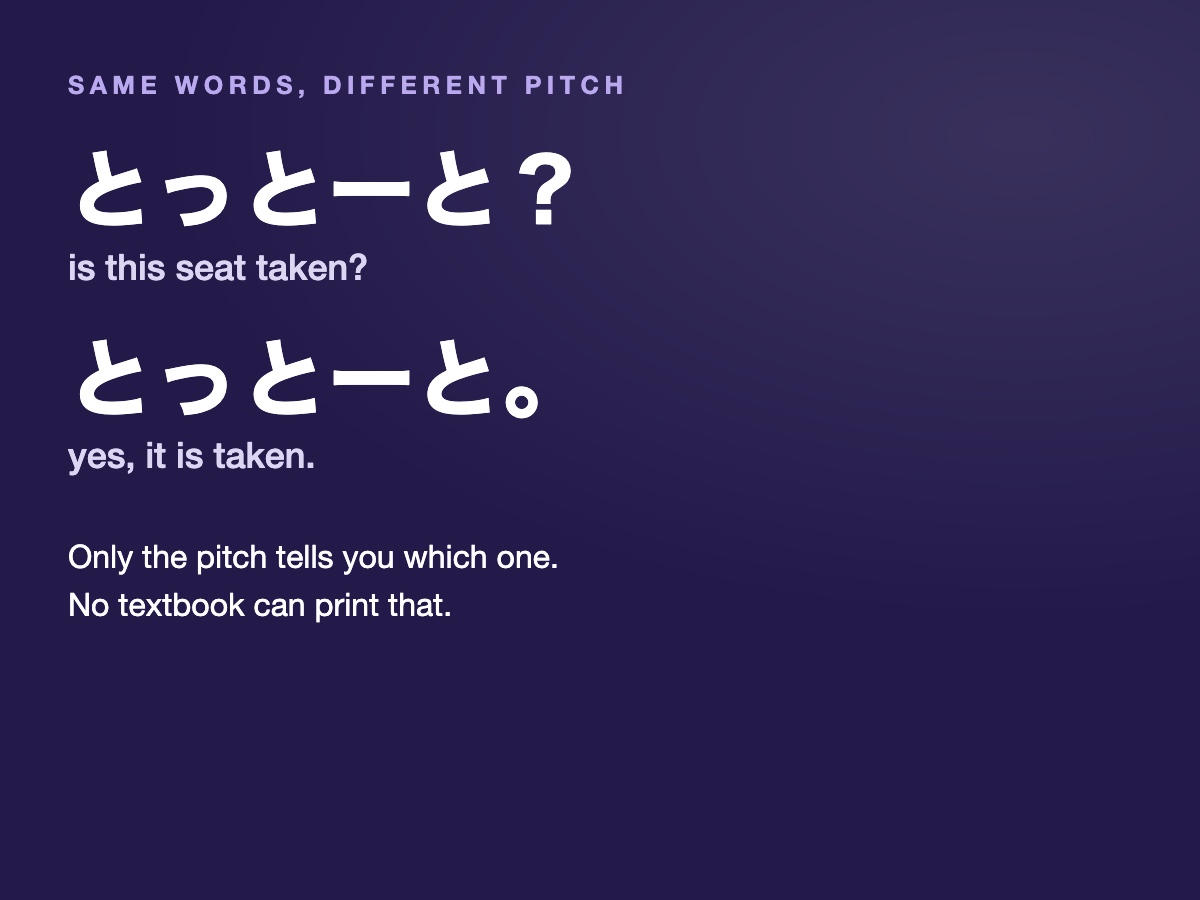
Tottou to? (とっとーと?)
Two things are happening in it at once.
First, the verb ending stretches. In Hakata the ru at the end of a verb often turns into a long vowel. Shittoru (知っとる) becomes shittou (知っとー), I know. The same thing happens to totte iru (取っている), which arrives as tottou (とっとー), I have taken it.
Second, the to on the end. In Hakata that particle goes on the end of a sentence to make it a question, which is the job no does in the Japanese you studied. Shitte iru no (知っているの?), do you know, comes out as shittou to (知っとーと?).
Put the two together and tottou to is asking whether something is taken.
That is the whole trick. One verb ending that stretches, and one particle that asks. Once you can hear those two pieces separately, a lot of what people say here stops sounding like noise.
This is the part a textbook will not do for you. It teaches the standard form and stops, and then you land in a city where the standard form is not the one you hear. You pick up the rest in rooms where people actually talk like this, which is part of why I run a meetup here.
博多には、打ち間違いにしか見えないのに、ごく普通の疑問文という一言があります。
「とっとーと?」
この一言には、博多弁の特徴が2つ入っています。
1つ目。動詞の語尾が伸びます。博多では動詞の終わりの「る」が長音になることがあります。「知っとる」が「知っとー」になります。「取っている」も同じように「とっとー」になります。
2つ目。最後の「と」です。博多では、この助詞を文の末尾につけて疑問文にします。習った日本語の「の」と同じ働きです。「知っているの?」が「知っとーと?」になります。
2つを合わせると、「とっとーと?」は、それ取ってあるの?という問いかけになります。
仕掛けはこれだけです。伸びる語尾が1つと、問いかけにする助詞が1つ。この2つを分けて聞き取れるようになると、この街で耳にする言葉のかなりの部分が分かるようになります。
そしてここは教科書では習いません。教科書は標準の形を教えて、そこで終わります。そのあと、標準の形では話していない街に降り立つことになります。残りは、実際にそう話している人たちの輪に入って覚えるしかありません。私が福岡でミートアップをやっている理由の1つがそこです。
Comments
No comments yet.
Log in to like, comment, and repost.
Keep reading
Oct 14, 2026 · 1 min read
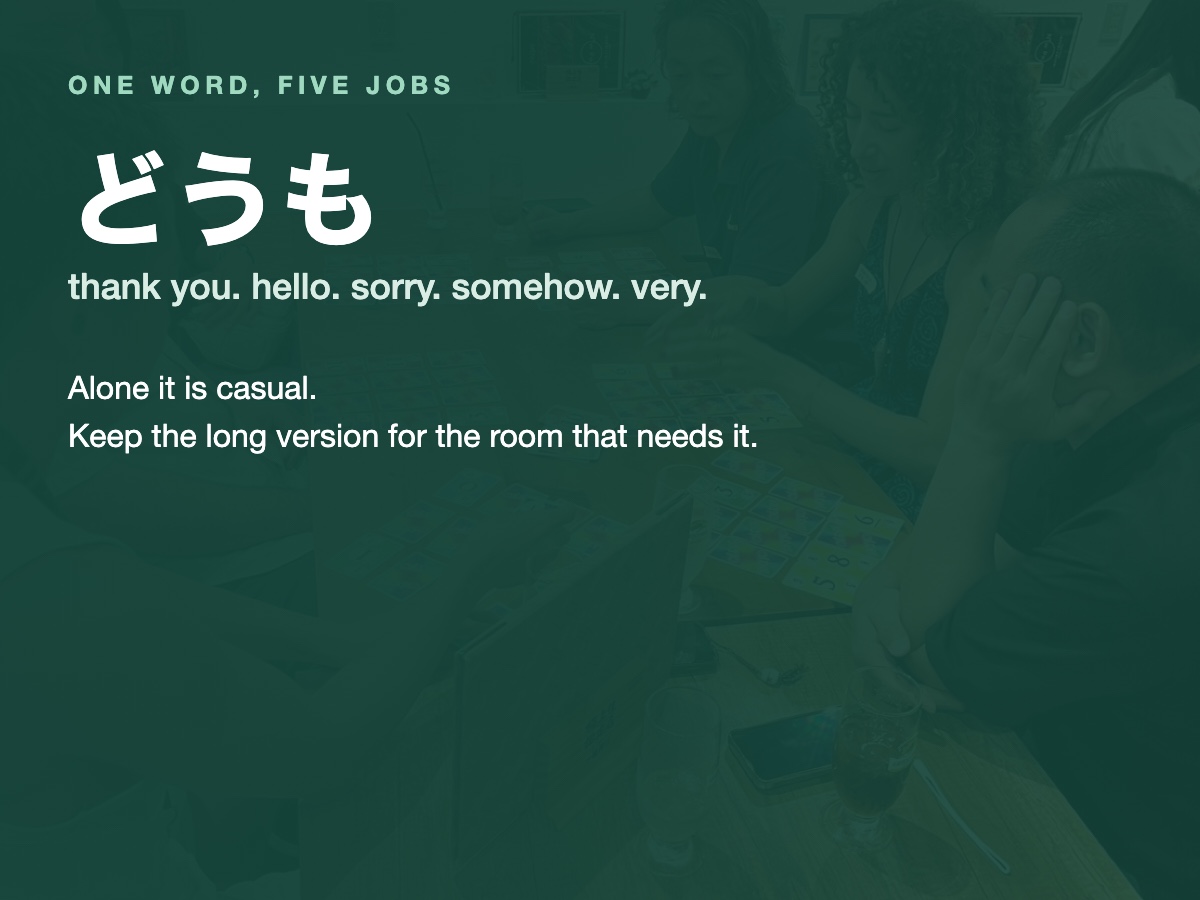
Doumo does five jobs and almost nobody teaches it properly
Thank you, hello, sorry, somehow, very. One word, and the jobs are not even related to each other.

Oct 14, 2026 · 1 min read
Seattle has a name for how cold its people are
Travis moved from Seattle to Fukuoka seven months ago. A conversation about sunlight, city size, and why strangers here start talking to you.

Oct 17, 2026 · 1 min read
N4 and N5, and working in Japan
The level in the job posting is a filter, not a rule. I know people working here at N4 and N5, and some of them are in Fukuoka.