
2026-09-17
You do not need fluent Japanese to work in Japan
日本語が流ちょうでなくても、日本では働ける
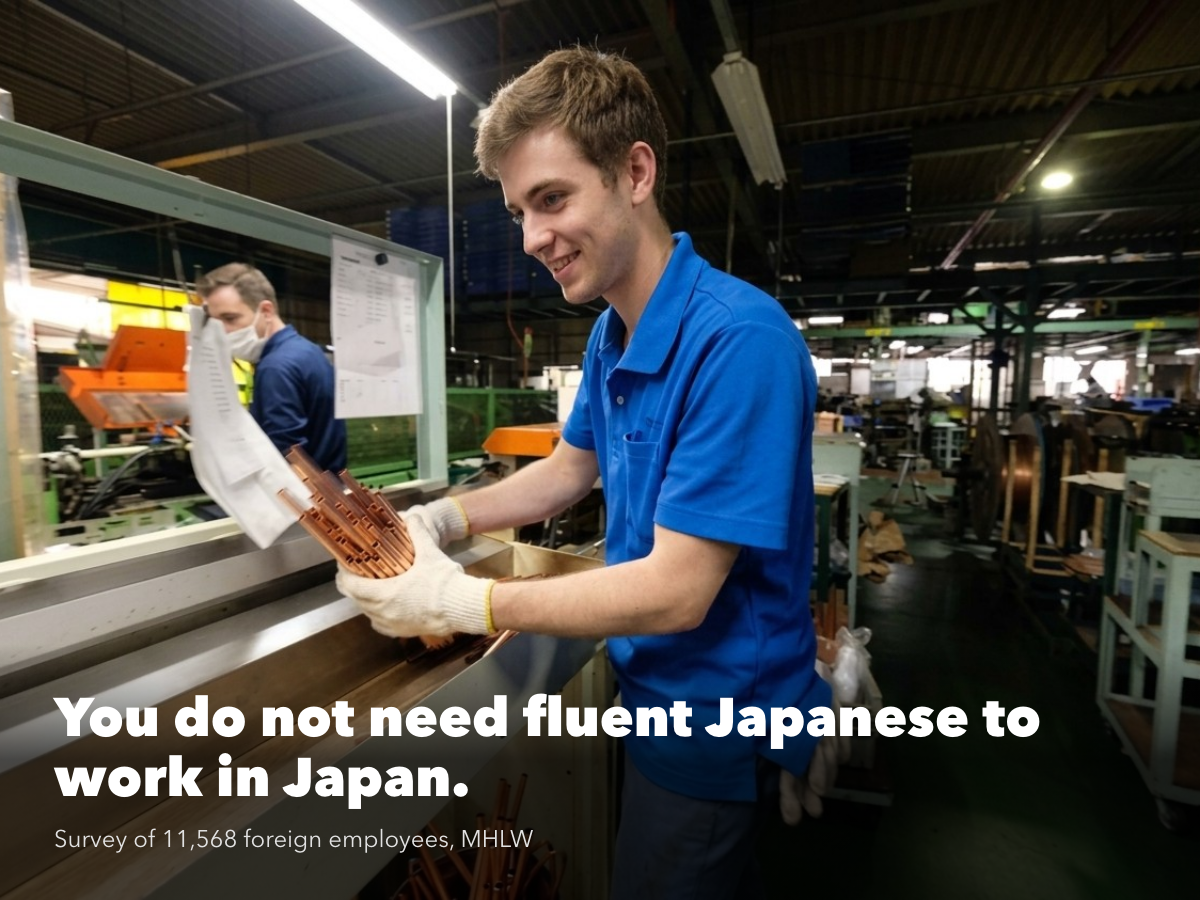
You do not need fluent Japanese to work in Japan. The government's own survey shows it.
The Ministry of Health, Labour and Welfare asked 11,568 foreign employees in Japan how well they speak Japanese. The most common answer was not "fluently." It was "I can join a short conversation about everyday things," at 24.6%.
Among people on the Engineer / Specialist in Humanities / International Services visa, the one most engineers and office professionals hold, 35.9% put their Japanese reading at N3 level or below.
The visa rules point the same way. For engineering roles on that visa, the criteria contain no Japanese language requirement. For specified skilled workers, the standard is JLPT N4 or the Japan Foundation's basic test.
That does not mean Japanese stops mattering once you are hired. In the same survey, the difficulty companies named most often with foreign staff was communication because of Japanese ability, at 43.9%. And since April 2026, some applications for roles built around language, such as interpreting or hotel front desk work, have to show B2 level ability in the working language. For Japanese, that means N2 or above.
What the numbers show is people working in Japan across every level of Japanese, including the lower ones. How much you need depends on the job.
日本語が流ちょうでなくても、日本で働けます。政府の調査がそれを示しています。
厚生労働省は、日本で働く外国人の社員11,568人に、日本語でどのくらい会話ができるかを聞きました。いちばん多かった答えは「流ちょうに話せる」ではありません。「日常的なことなら短い会話に参加できる」で、24.6%でした。
技術・人文知識・国際業務の在留資格(エンジニアや事務の仕事の多くがこれです)の人のうち、日本語の読解がN3相当以下と答えた人は35.9%います。
在留資格の決まりも同じ方を向いています。この在留資格の技術系の仕事について、基準に日本語の要件はありません。特定技能では、日本語能力試験のN4か、国際交流基金日本語基礎テストが基準です。
採用されたあとは日本語が関係ない、という意味ではありません。同じ調査で、企業が挙げた外国人社員についての困りごとの1位は、日本語力による意思疎通の難しさで43.9%でした。そして2026年4月からは、通訳やホテルのフロントのように言葉を使って人と接する仕事の一部の申請で、仕事で使う言語のB2相当を示す資料が必要になりました。日本語ならN2以上です。
数字が示しているのは、日本語のどのレベルの人も、低いレベルの人も含めて日本で働いているということです。どれだけ必要かは仕事によって違います。
Comments
No comments yet.
Log in to like, comment, and repost.