
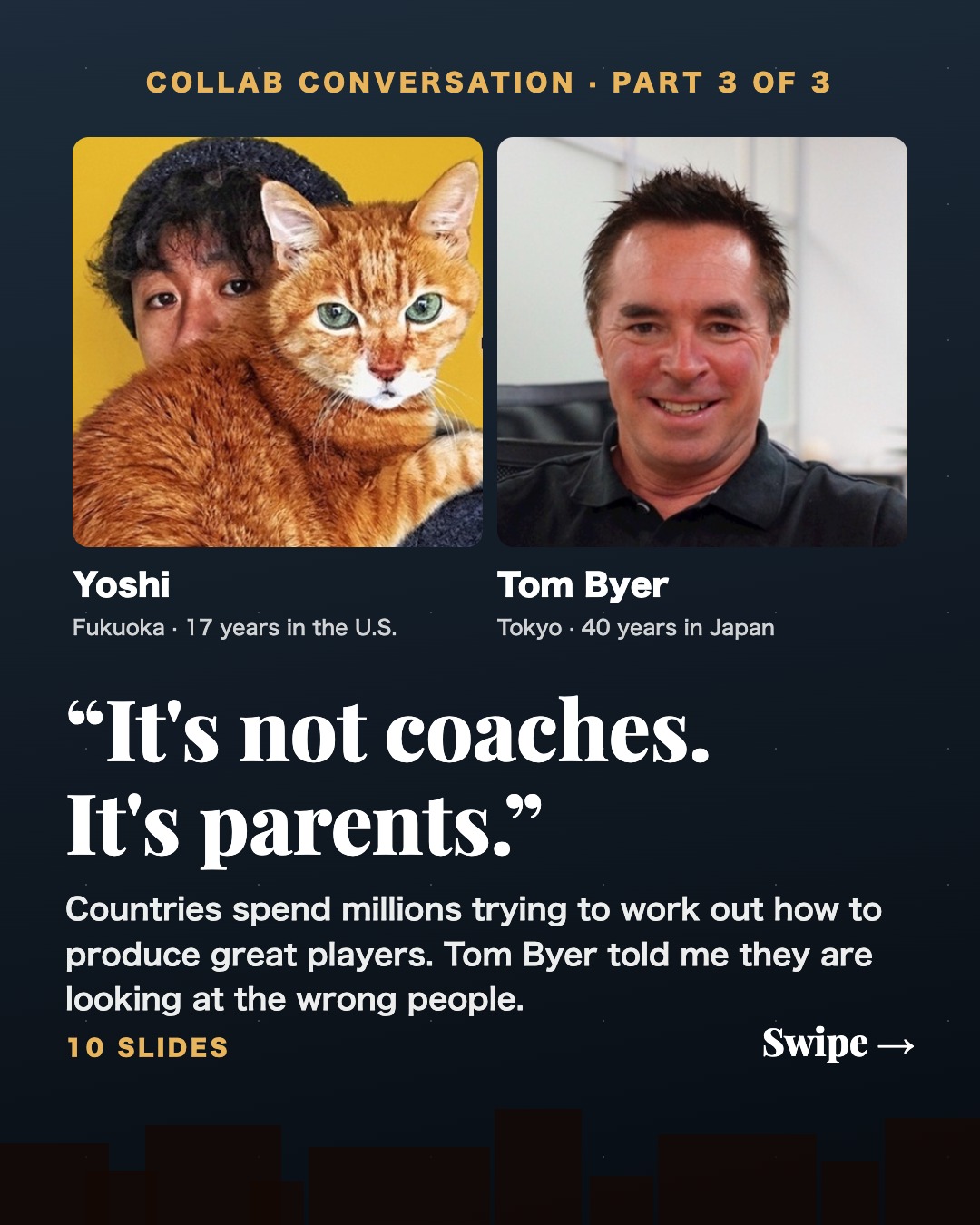
It's not coaches. It's culture. It's parents.
コーチではない。文化と、親だ
Countries spend millions of dollars trying to produce great soccer players. Tom Byer says most of them are looking in the wrong place.
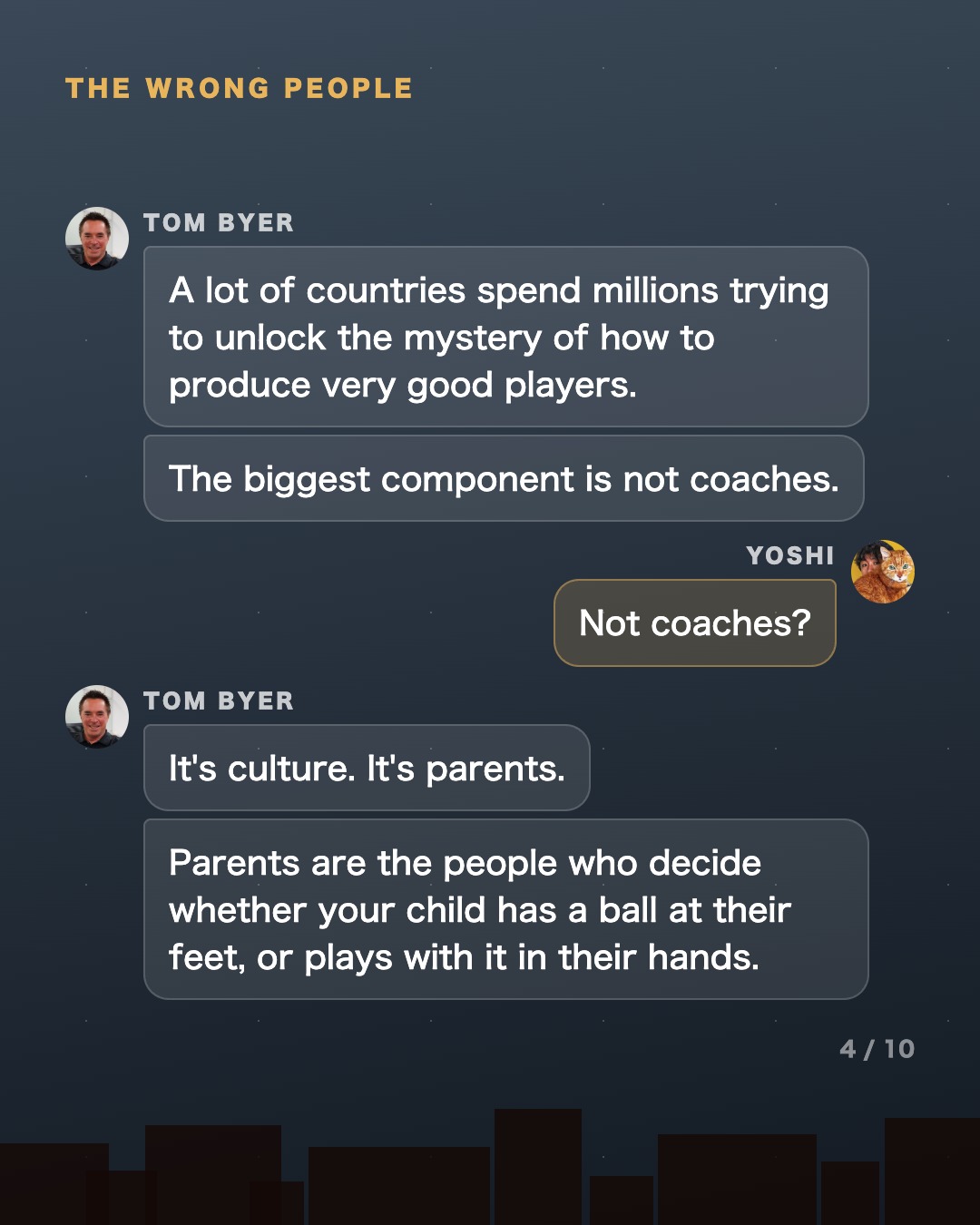
"The biggest component is not coaches. It's culture. It's parents."
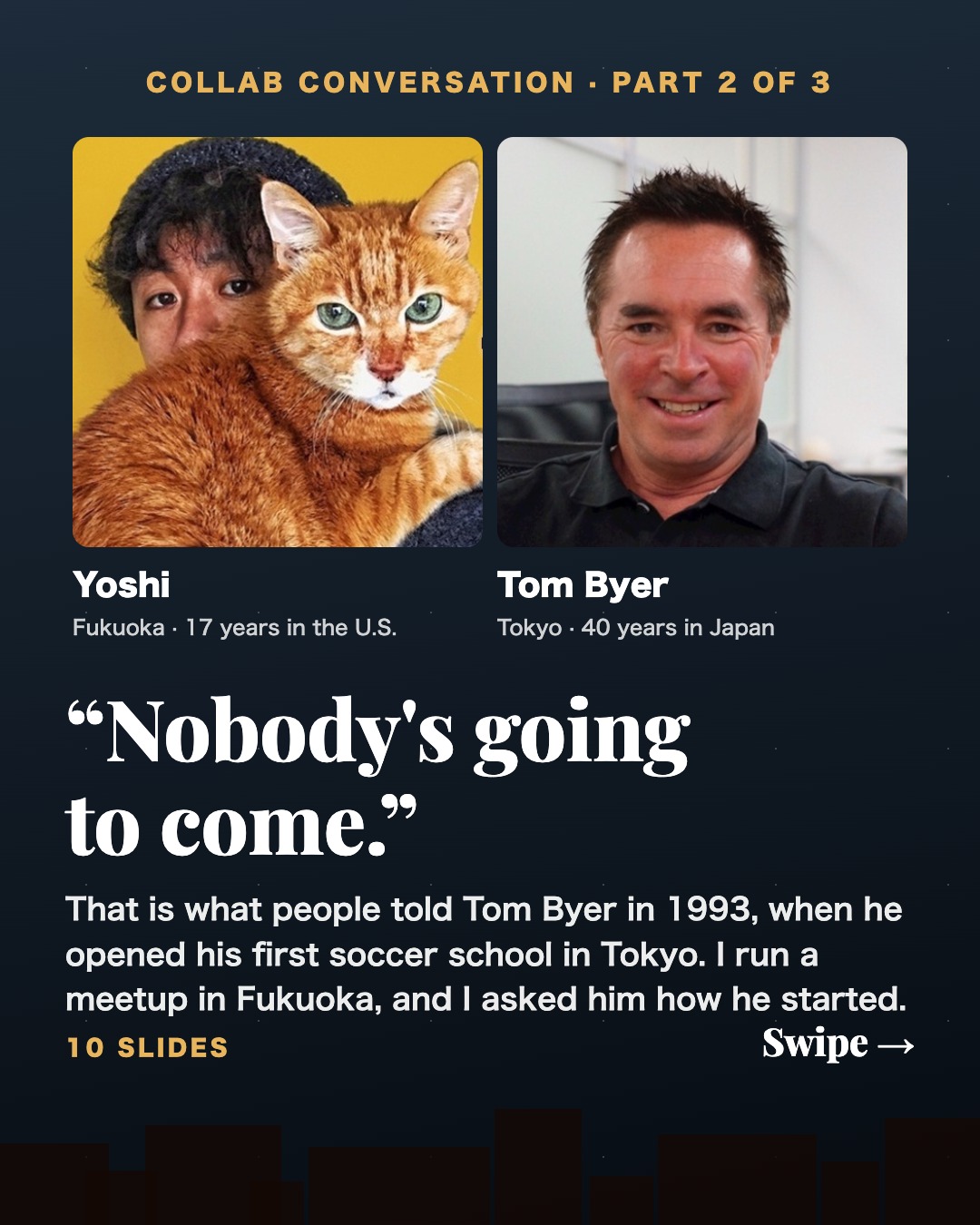
This is part 3, the last part of my conversation with Tom, the American behind over 150 soccer schools in Japan and 14 years on TV Tokyo's Oha Suta.
Today his work is a philosophy called Football Starts at Home. His book is published in Japanese, French, Italian, Dutch and Persian. Takeshi Okada, the former head coach of Japan's national team, wrote the endorsement on the cover.
Here are the highlights.
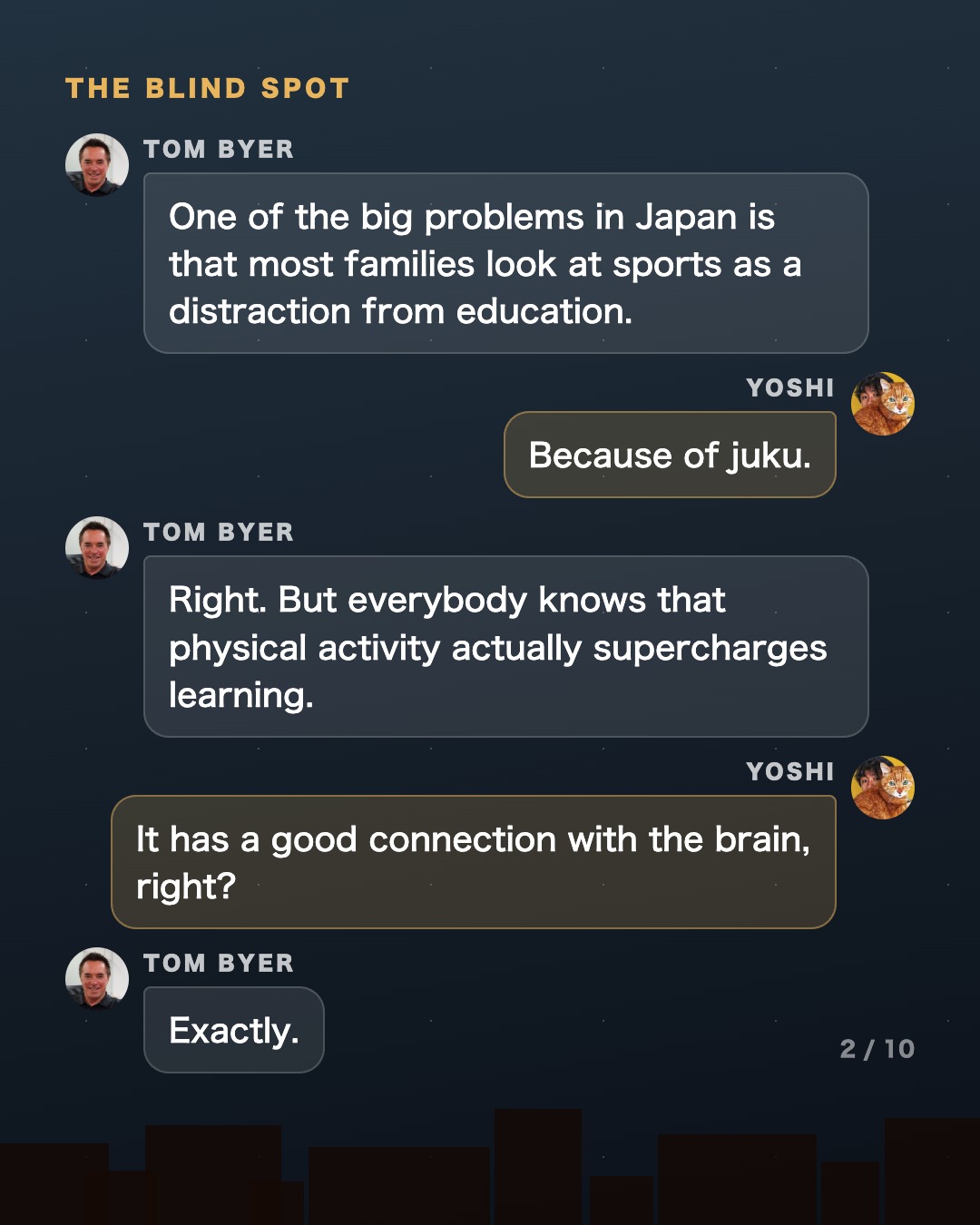
Tom: One of the big problems in Japan is that most families see sports as a distraction from education, because of juku. But everybody knows that physical activity actually supercharges learning.
Yoshi: It has a good connection with the brain, right?
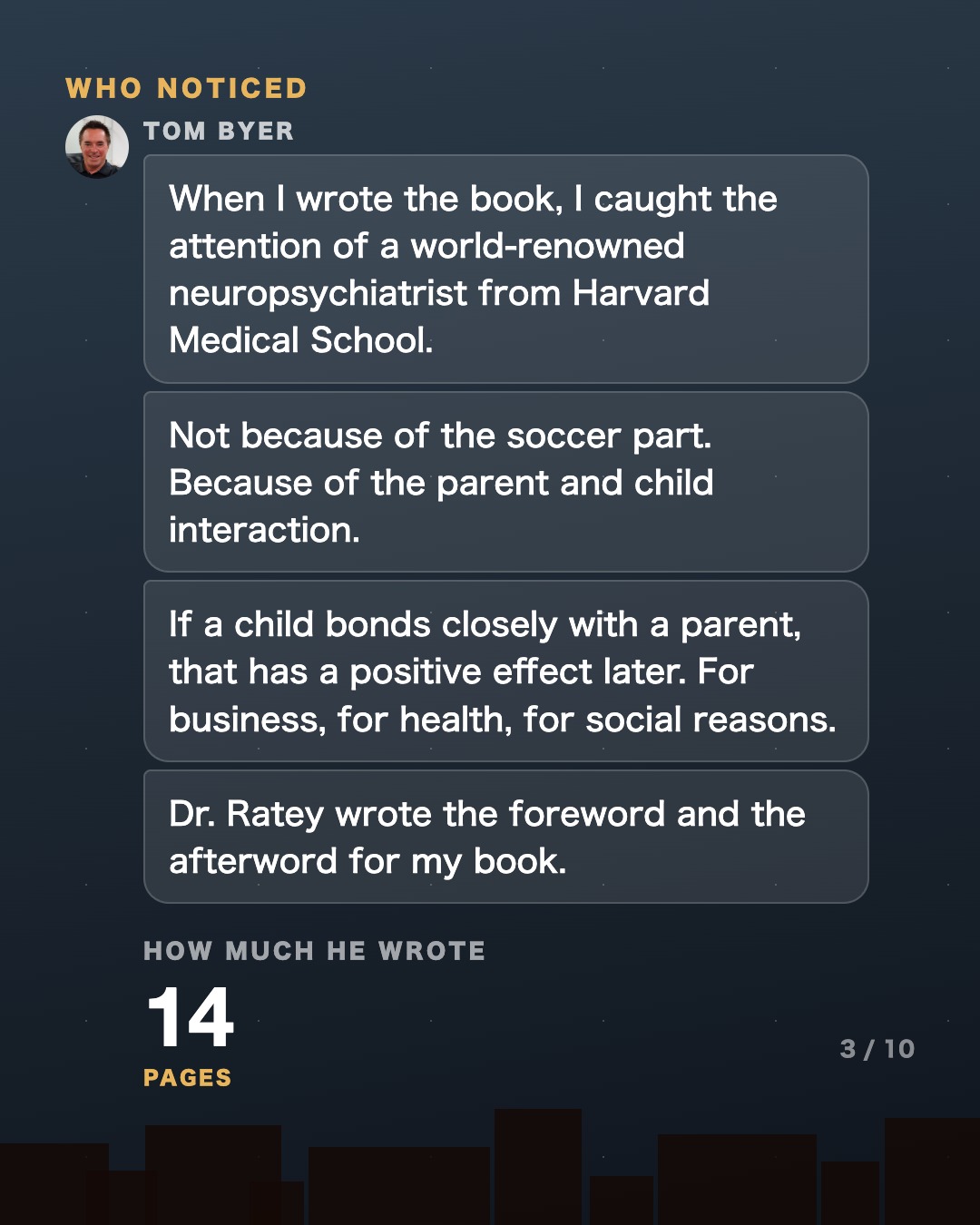
Tom: Exactly. When I wrote the book, a world-renowned neuropsychiatrist from Harvard Medical School, Dr. John Ratey, took a big interest. Not because of the soccer part. Because of the parent and child interaction. He wrote the foreword and the afterword, 14 pages.
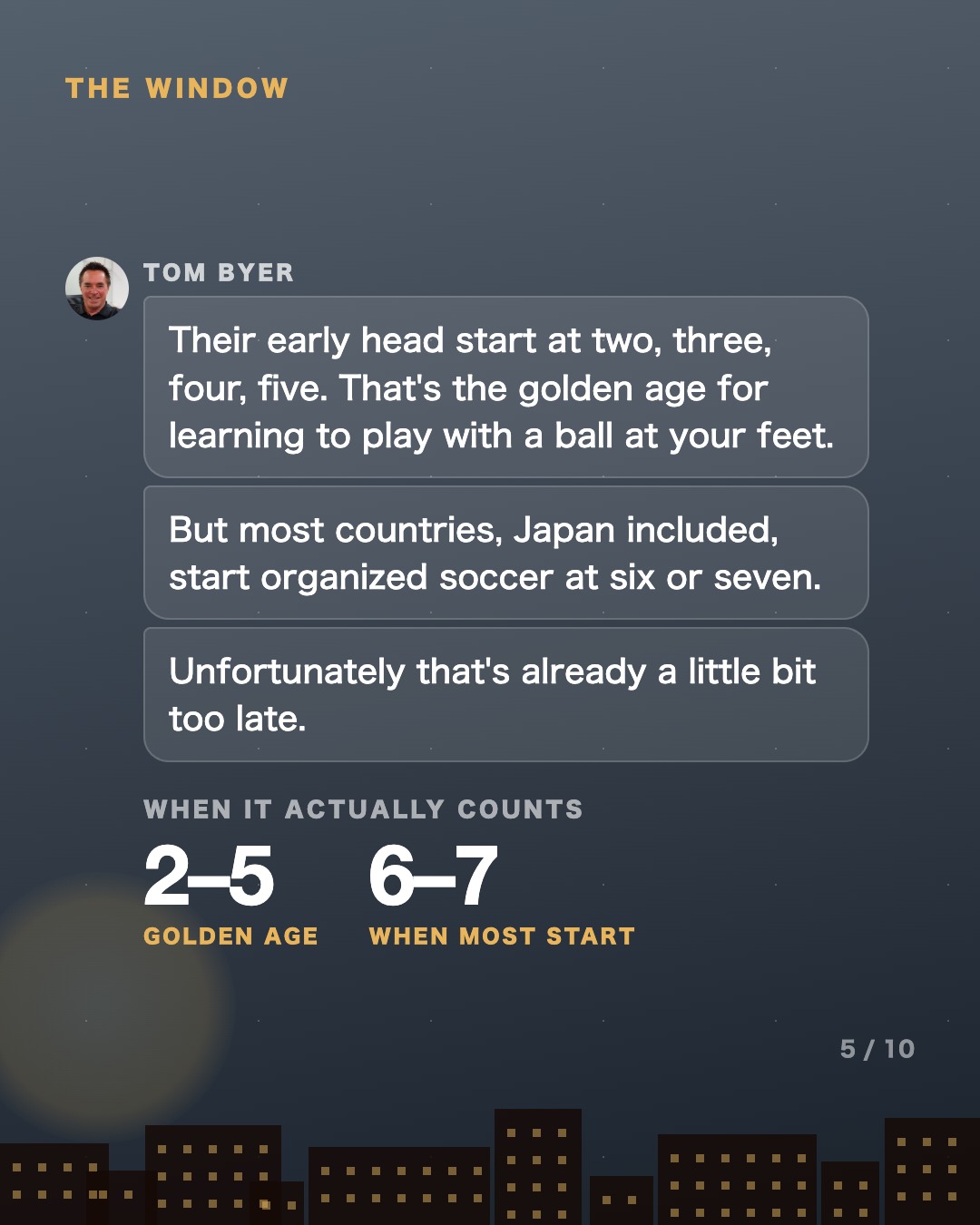
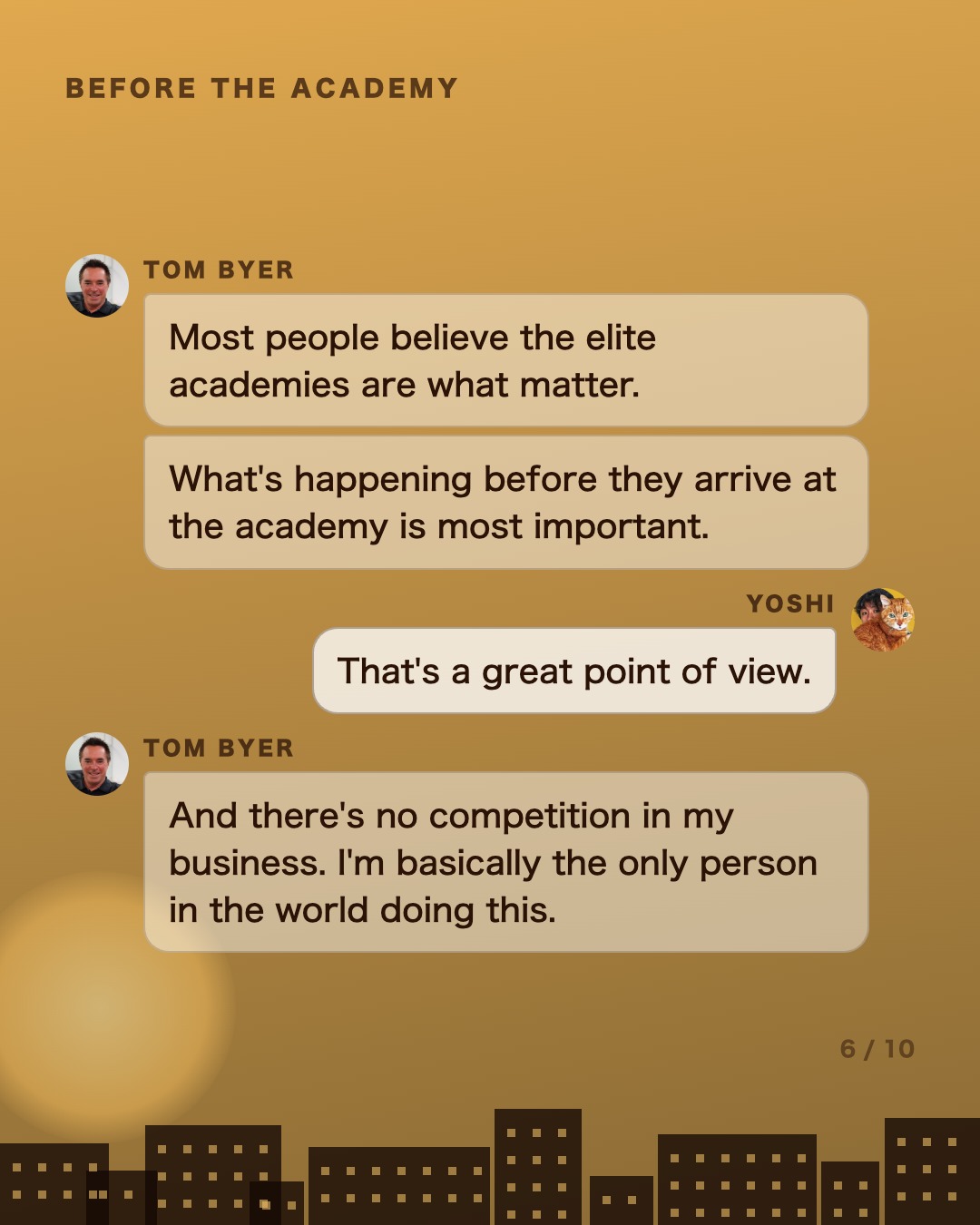
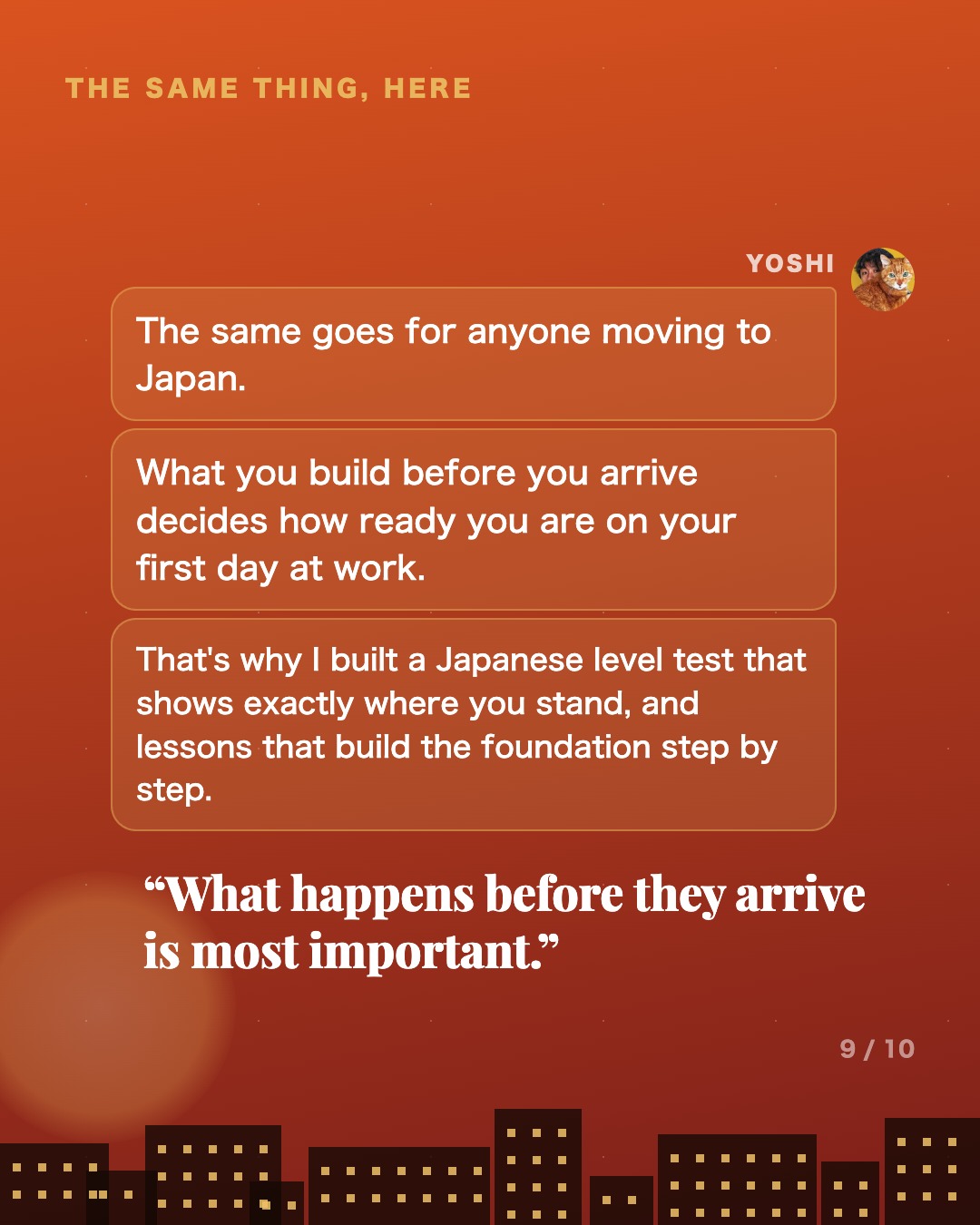
Tom: Parents are the ones who decide whether a child has a ball at their feet or plays with it in their hands. Ages two to five are the golden age. But in most countries, Japan included, kids start organized soccer at six or seven. That's already a little late. Everyone thinks the elite academies are what matter. What happens before they arrive at the academy is most important.
Tom showed me a video of his son at two and a half, working the ball with his feet.
Tom: Look at how focused he is. He's learning how to learn. If you can develop a child's ability to pay attention, that's a lifelong skill.
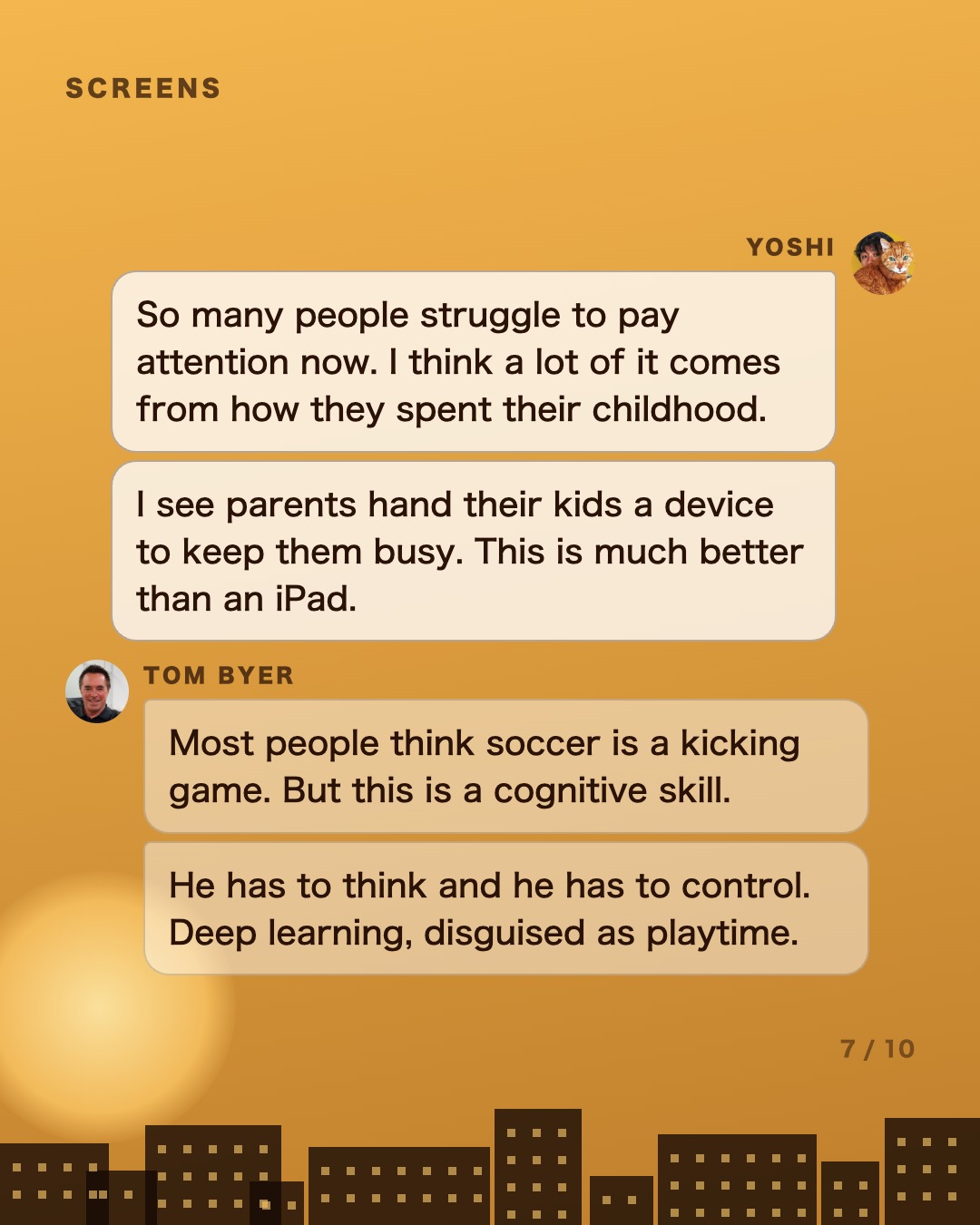
Yoshi: So many people struggle to pay attention now. I think a lot of it comes from how they spent their childhood. I see parents hand their kids a device to keep them busy. This is much better than an iPad or video games.
Tom: Most people think soccer is a kicking game. But this is a cognitive skill. He has to think and he has to control. We call it deep learning, disguised as playtime.
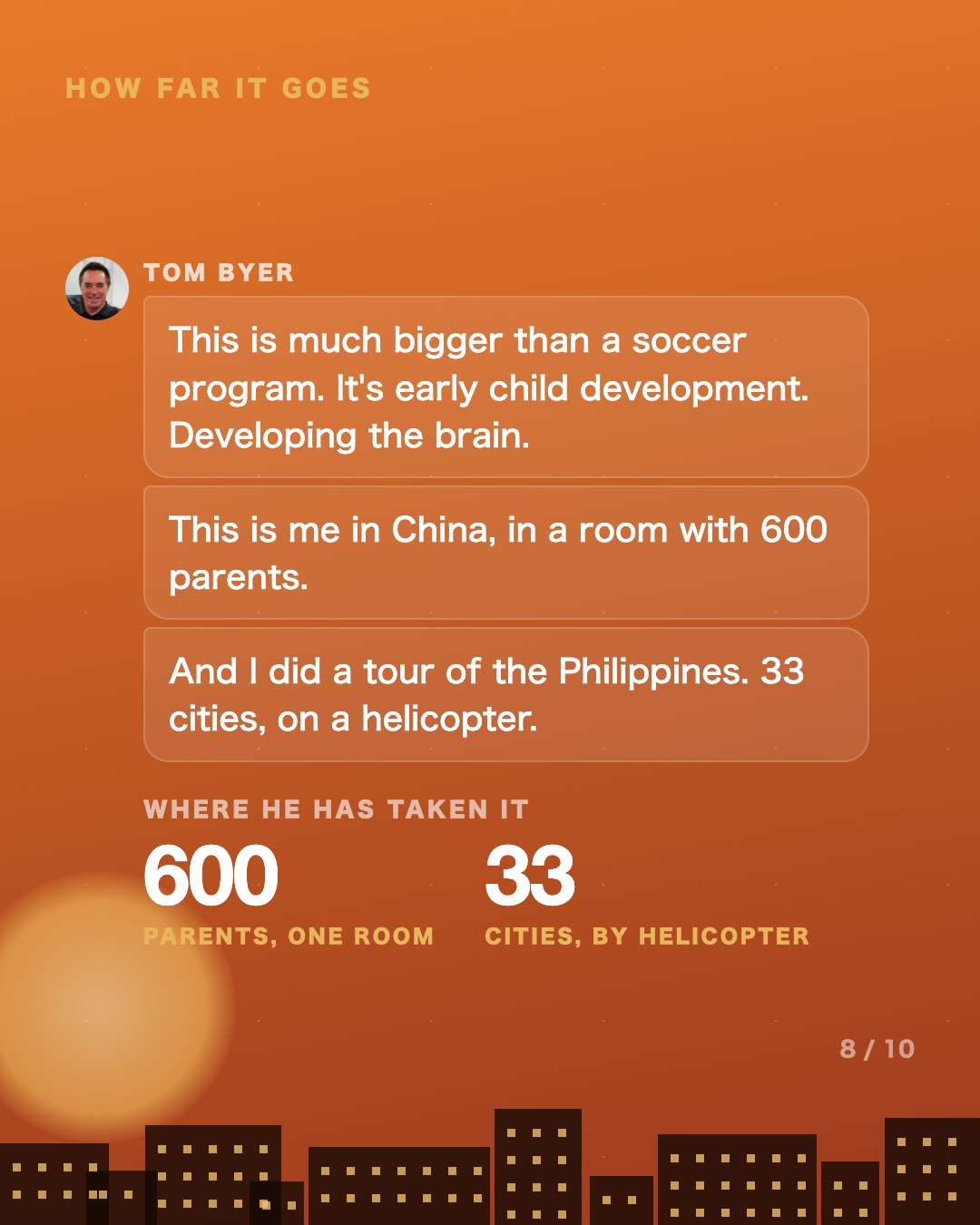
Tom: In China I've had a room of 600 parents. In the Philippines I toured all 33 regional football associations by helicopter. This is much bigger than a soccer program. It's early child development.
"What happens before they arrive at the academy is most important."
The same goes for anyone moving to Japan. What you build before you arrive decides how ready you are on your first day at work.
That's why I built a Japanese level test that shows exactly where you stand, and lessons that build the foundation step by step, wherever you are now.
That's the last part. Thank you, Tom. Next time, a beer in Nakasu.
世界の国々は、優れたサッカー選手を育てるために何百万ドルも使っています。トム・バイヤーさんは、その多くが見ている場所を間違えている、と言います。
「一番大きいのはコーチではありません。文化です。親です」
日本で150を超えるサッカー教室を作り、テレビ東京「おはスタ」に14年出ていたアメリカ人、トムさんとの対談の3回目。最後の回です。
今の仕事は「Football Starts at Home(サッカーは家から始まる)」という考え方そのものです。本は日本語、フランス語、イタリア語、オランダ語、ペルシャ語で出ています。表紙の推薦文は、元日本代表監督の岡田武史さんが書きました。
話の中心だけ載せます。
トム: 日本の大きな問題の1つは、塾があるぶん、多くの家庭がスポーツを勉強の妨げだと見ていることです。でも、体を動かすことが学びを加速させるのは、みんな知っていることです。
ヨシ: 脳とのつながりがいい、ということですよね。
トム: そのとおりです。本を書いたとき、ハーバード大学医学大学院の神経精神医学の第一人者、ジョン・レイティ博士が強い関心を持ってくれました。サッカーの部分にではありません。親と子のやりとりに、です。まえがきとあとがきを、14ページ書いてくれました。
トム: 足元にボールがあるか、手で遊ぶか。決めているのは親です。2歳から5歳が黄金期です。でも日本を含むほとんどの国で、子どもが組織だったサッカーを始めるのは6歳か7歳。それではもう少し遅いんです。みんな、エリートのアカデミーが大事だと思っています。でも、そこに来る前に何があったか。そこが一番大事です。
トムさんは、2歳半の息子さんが足でボールを扱っている映像を見せてくれました。
トム: どれだけ集中しているか見てください。学び方を学んでいるんです。子どもの「注意を向ける力」を育てられたら、それは一生ものです。
ヨシ: 今は、集中が続かない人が本当に多いです。その多くは、子どものころの過ごし方から来ていると思います。子どもを静かにさせるために端末を渡す親を見かけますが、これはiPadやゲームよりずっといい。
トム: 多くの人はサッカーを蹴る競技だと思っています。でもこれは、頭の技術です。考えて、扱わないといけない。遊びの顔をした、深い学び。私たちはそう呼んでいます。
トム: 中国では、1つの会場に600人の親が集まったことがあります。フィリピンでは、33ある地域のサッカー協会を全部、ヘリコプターで回りました。これはサッカーの事業よりずっと大きい話です。幼児の発達の話です。
「アカデミーに入る前に何があったか。そこが一番大事です」
日本に来る人にも、同じことが言えます。着く前に何を積んでおいたかで、働き始めた初日の自分が決まります。
だから私は、今の力がどこにあるかがはっきり分かる日本語のレベル診断と、今いる場所から順に土台を作るレッスンを用意しました。
ここまでが最後の回です。トムさん、ありがとうございました。次は中洲でビールを。
コメント
まだコメントはありません。
ログインすると、いいね・コメント・リポストができます。
あわせて読む
2026年11月3日 · 約1分で読めます
みんな、どうかしていると思っていた
1993年、トム・バイヤーさんは誰にも信じてもらえなかったサッカー教室を開きました。今は教室が150を超え、子どもは約25,000人。お金になる前に何を作るか。対談の2回目です。
2026年10月31日 · 約1分で読めます
大変なのは手続きではなく、何でもない夜のほう
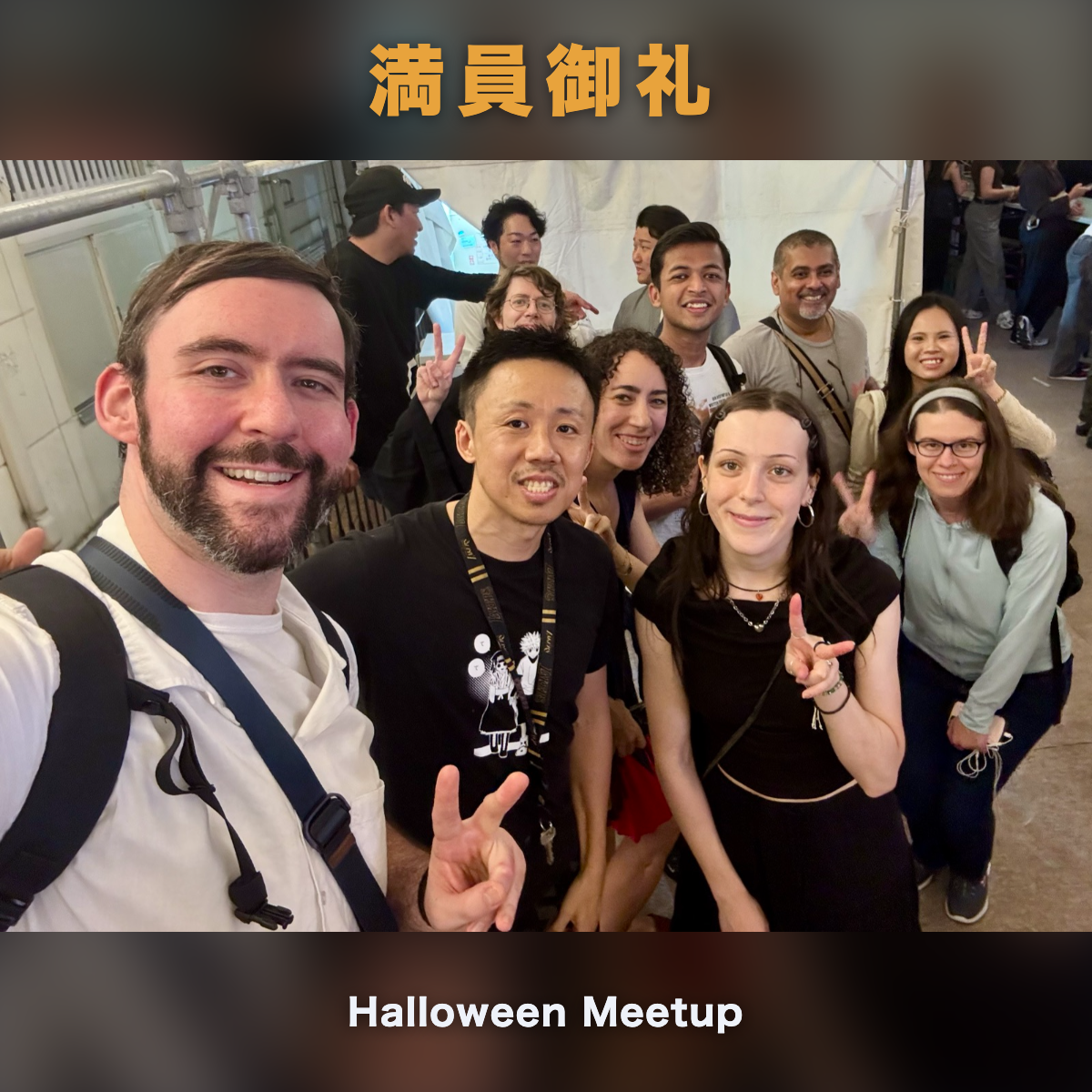
ビザは下りるし、街も覚えます。そのあとに来るのが、誰もいない土曜の夜です。福岡のミートアップはそこを埋めるために始めました。10月31日の夜はハロウィンの回です。
2026年10月30日 · 約1分で読めます
JLPTに、話す試験はない
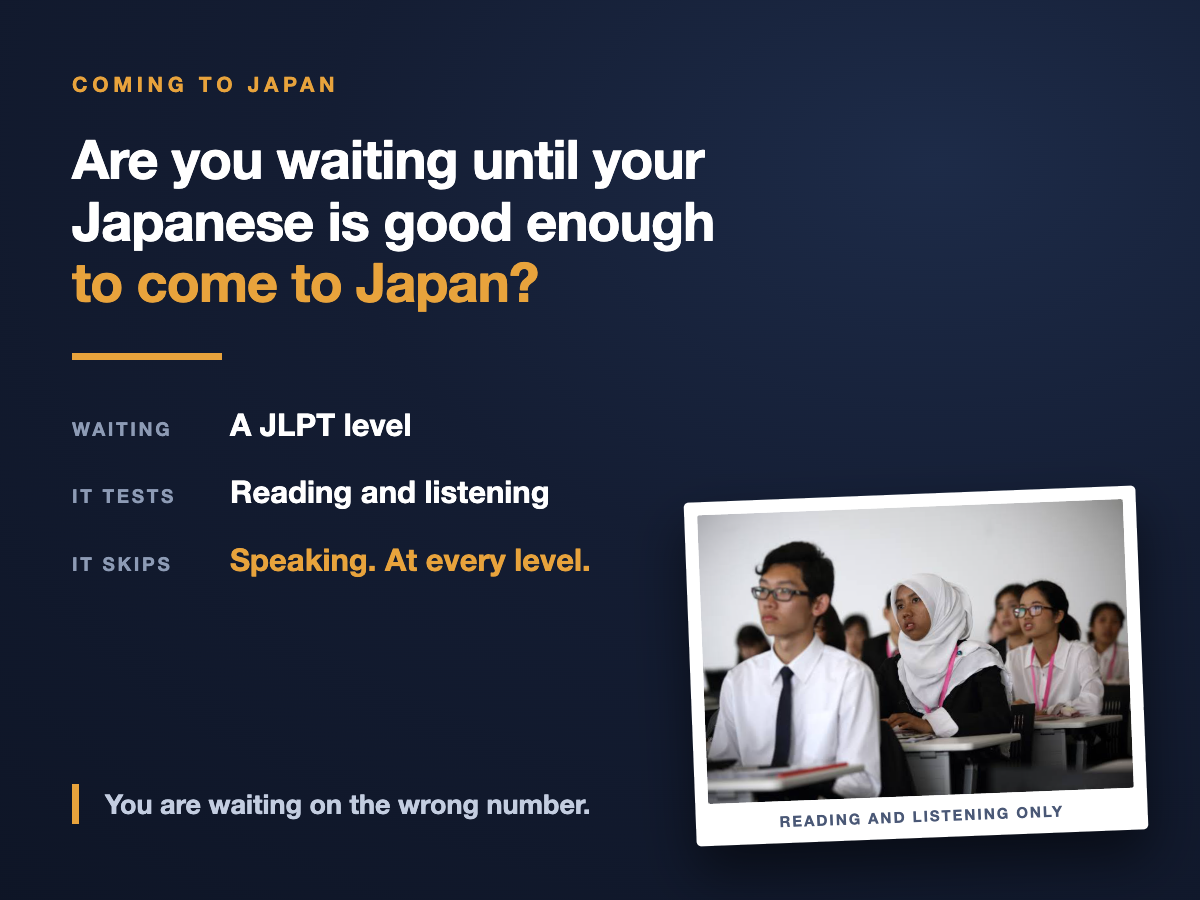
JLPTが測るのは語彙・読解・聴解で、話す試験はどのレベルにもありません。日本語が十分になるまで日本に来るのを待っているなら、それを測っていない数字を待っていることになります。