

Everybody thought I was crazy
みんな、どうかしていると思っていた
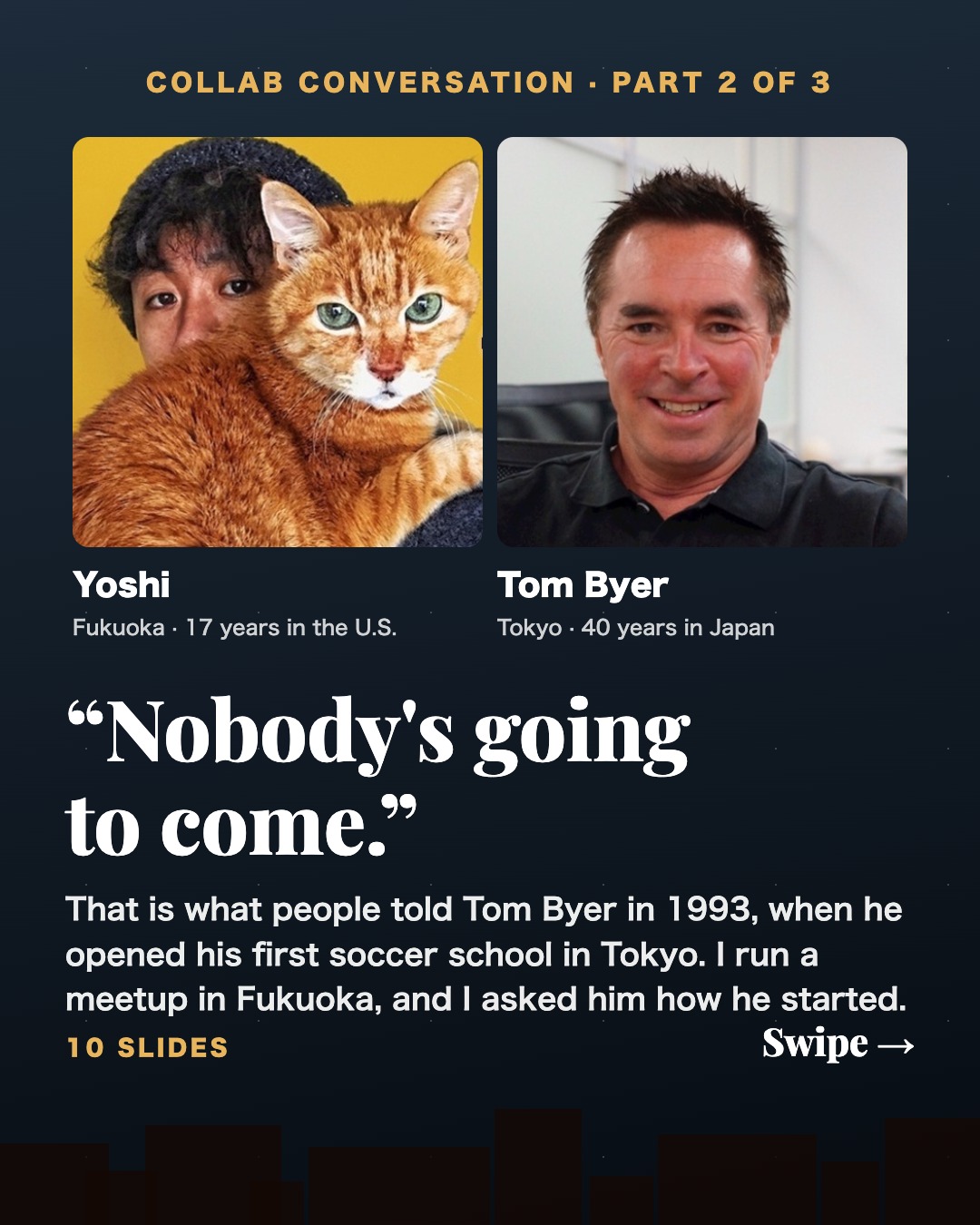
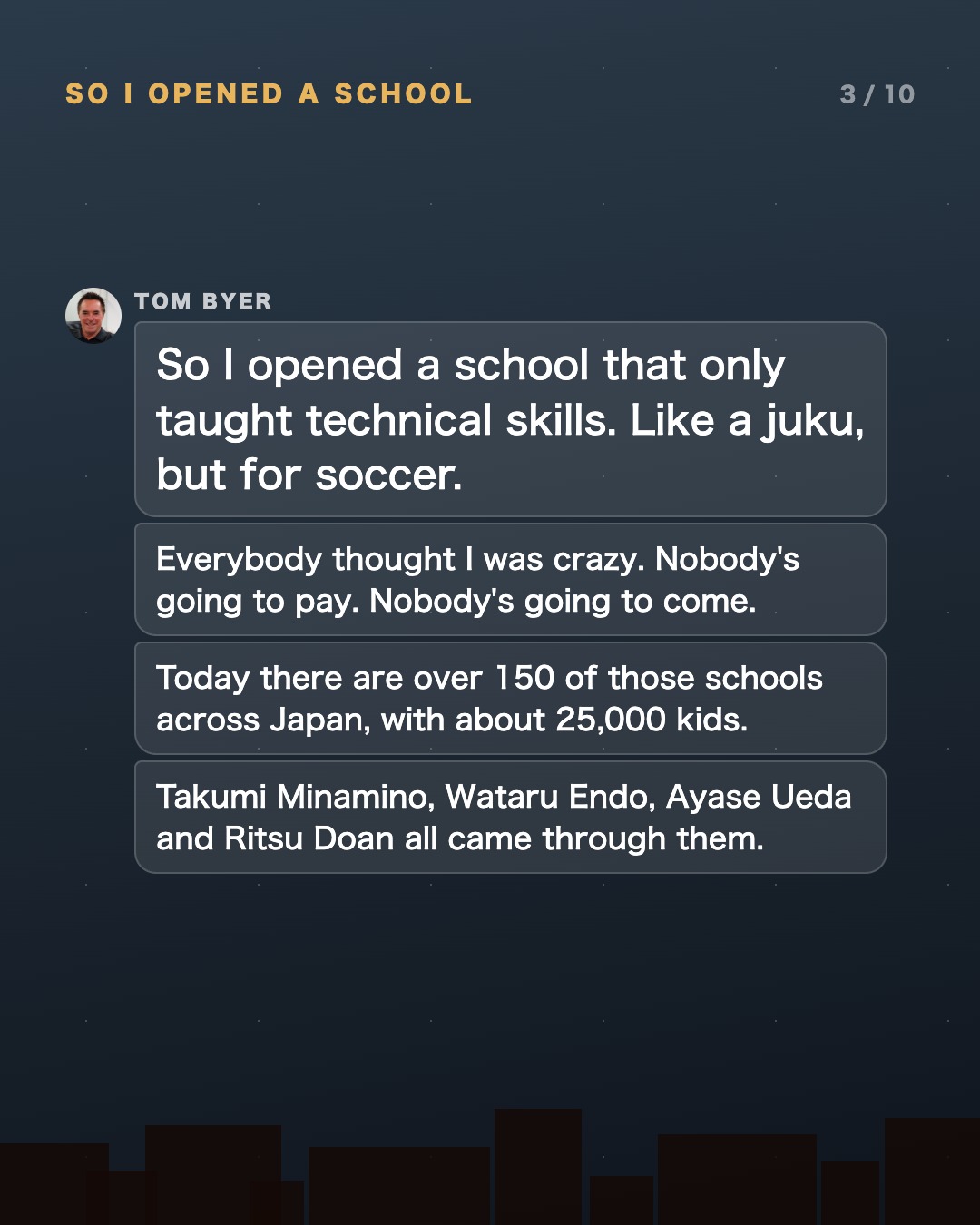
"Everybody thought I was crazy. Nobody's going to pay. Nobody's going to come."
That's what people told Tom Byer in 1993, when he opened his first soccer school in Tokyo.
Today there are over 150 of those schools across Japan, with about 25,000 kids. Takumi Minamino, Wataru Endo, Ayase Ueda and Ritsu Doan all came through them.
This is part 2 of my conversation with Tom, the American who has lived in Japan for over 40 years and spent 14 of them teaching kids soccer on TV Tokyo's Oha Suta.
Here are the highlights.
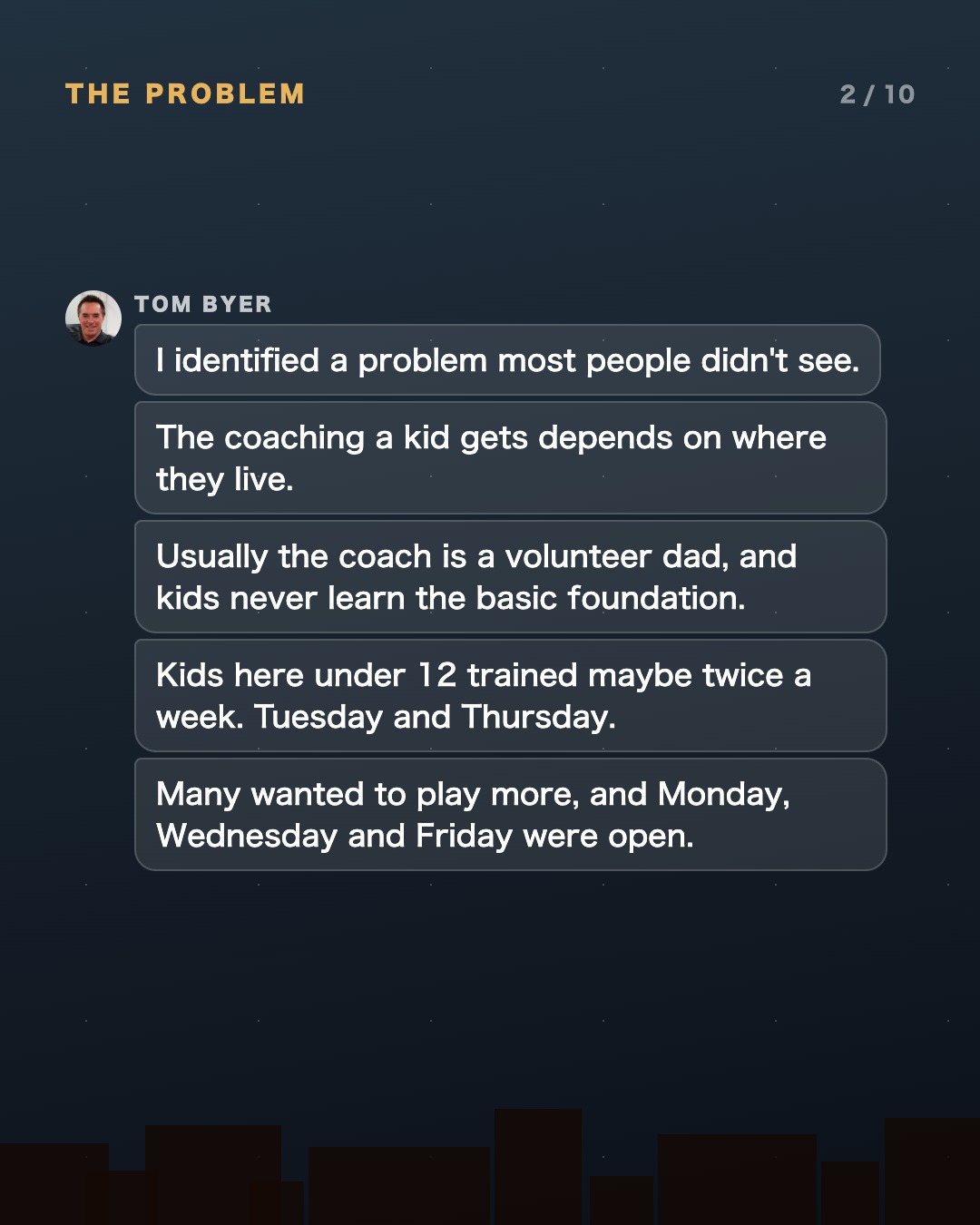
Tom: I identified a problem most people didn't see. The coaching a kid gets depends on where they live. Usually the coach is a volunteer dad, and kids never learn the basic foundation. Kids here under 12 trained maybe twice a week, Tuesday and Thursday. Many wanted to play more, and Monday, Wednesday and Friday were open. So I opened a school that only taught technical skills. Like a juku, but for soccer.
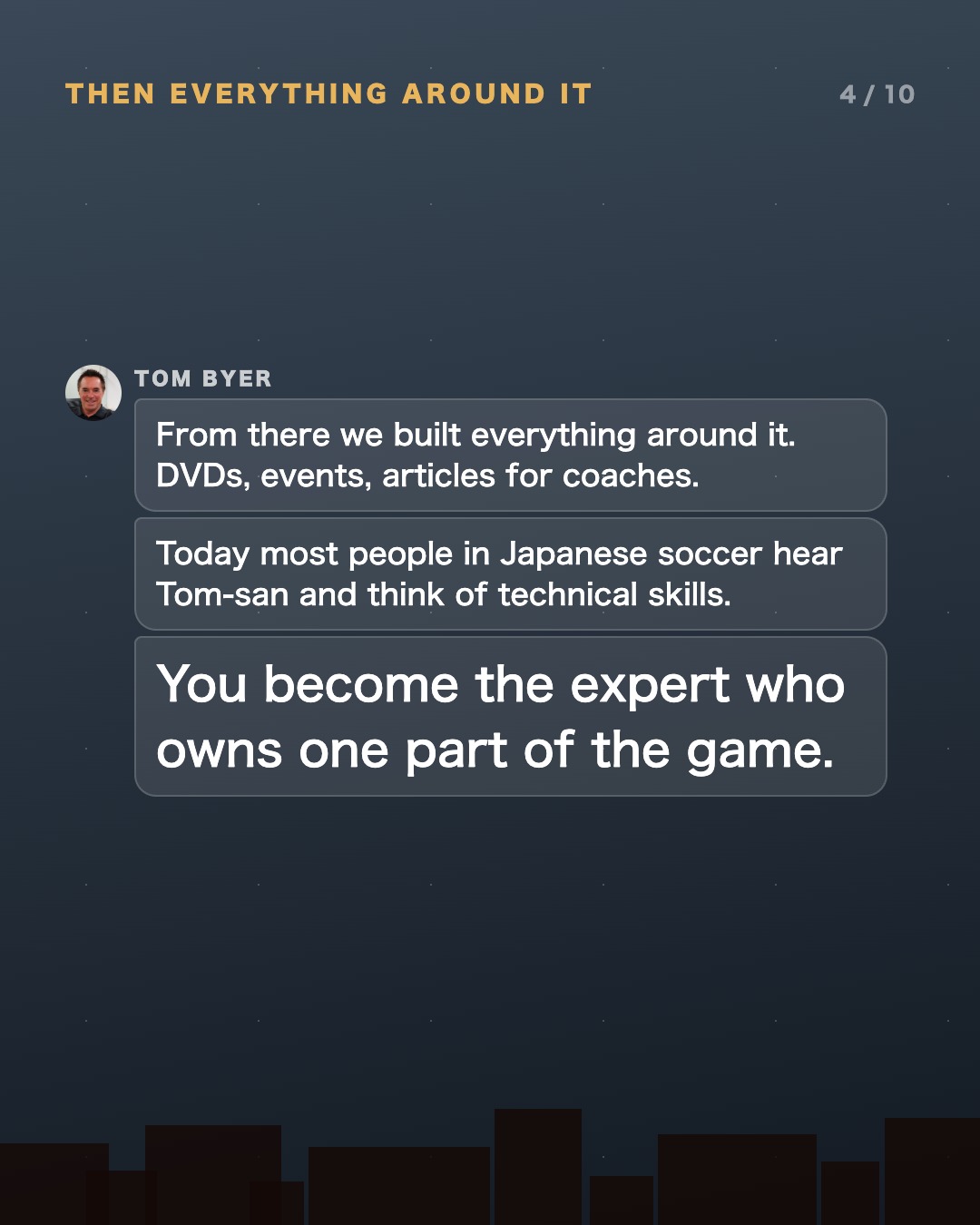
Tom: From there we built everything around it. DVDs, events, articles for coaches. Today most people in Japanese soccer hear "Tom-san" and think of technical skills. You become the expert who owns one part of the game.
Yoshi: I started a meetup in Fukuoka this June. When I came back in 2022, I went to a few international events here. The organizers couldn't really communicate in English, and I saw people standing by themselves with nobody doing anything about it. I thought I could do better. In the U.S. I ran groups like that for years, from the Japanese Student Association to my intramural basketball team at San Diego State.
Tom: Work on building your community. You don't need to make money off it now. It's about providing a solution to a problem.
Yoshi: That's how I see it. I charge 100 yen to join. Our LINE group has over 125 people from more than 20 countries, and it keeps growing. If you focus too much on the money, you lose your direction.
Tom: Everything I got paid to do in my career, I would have done for free. If TV Tokyo told me they could put me on Oha Suta every day but couldn't pay me, I would have said yes. Of course I want to make money too. But that's not the main goal. Follow your energy. If you're a good person and you do good things, good things happen to you.
Tom saw a gap nobody else saw: kids who wanted to play more, and nobody teaching them the basics.
The gap I see in Fukuoka is foreigners who come here with real skills, but no one to connect with and Japanese that can't keep up yet. That's why I run the meetup, and why I built Japanese lessons and a level test that shows exactly where you stand.
To be continued. Part 3 is about why, in Tom's words, soccer starts at home.
「みんな、どうかしていると思っていました。誰も金を払わない。誰も来ない」
1993年、トム・バイヤーさんが東京で最初のサッカー教室を開いたときに、周りから言われた言葉です。
今、その教室は日本全国で150を超え、通う子どもは約25,000人。南野拓実、遠藤航、上田綺世、堂安律も、ここを通ってきました。
40年以上日本に住み、そのうち14年をテレビ東京「おはスタ」で子どもにサッカーを教えてきたアメリカ人、トムさんとの対談の2回目です。
話の中心だけ載せます。
トム: ほとんどの人が見ていない問題を、1つ見つけました。どんな指導を受けられるかは、住んでいる場所で決まります。コーチはたいていお父さんの有志で、子どもは基礎を習わないままです。こちらでは12歳以下の子どもは週に2回、火曜と木曜くらいしか練習しません。もっとやりたい子はたくさんいて、月曜と水曜と金曜は空いていました。だから、技術だけを教える教室を作りました。塾のサッカー版です。
トム: そこから、周りを全部作りました。DVD、イベント、指導者向けの記事。今、日本のサッカーに関わる人の多くは「トムさん」と聞けば技術の話を思い浮かべます。競技の一部分を、自分のものとして持つ専門家になる、ということです。
ヨシ: 私は今年の6月に、福岡でミートアップを始めました。2022年に戻ってきて、こちらの国際交流のイベントにいくつか行ってみたんです。主催する人が英語でうまく話せず、1人で立っている人がいるのに、誰も何もしていませんでした。自分ならもっとできると思いました。アメリカでは、日本人留学生の会からサンディエゴ州立大学の学内バスケットボールのチームまで、そういう集まりを何年もやっていました。
トム: 自分のコミュニティを作ることに力を使ってください。今すぐお金にする必要はありません。問題に対する答えを出す、ということです。
ヨシ: 私も同じ見方です。参加費は100円にしています。LINEのグループは20を超える国と地域の125人以上で、今も増えています。お金に寄せすぎると、向かう先を見失います。
トム: これまで報酬をもらってやってきたことは、全部ただでもやっていました。テレビ東京に「おはスタに毎日出てもらえるが、お金は出せない」と言われていても、やると答えていたはずです。もちろんお金は稼ぎたい。でも、それが一番の目的ではありません。自分の熱が向く方へ進むこと。いい人間でいて、いいことをしていれば、いいことが返ってきます。
トムさんは、誰も見ていなかった空きを見つけました。もっとやりたい子どもがいるのに、基礎を教える人がいなかった、という空きです。
私が福岡で見ている空きは、実力を持ってここに来たのに、つながる相手がいなくて、日本語がまだ追いついていない人たちです。だからミートアップをやっていますし、日本語のレッスンと、今の力がどこにあるかがはっきり分かるレベル診断を作りました。
続きます。3回目は、トムさんの言葉で言う「サッカーは家から始まる」の話です。
コメント
まだコメントはありません。
ログインすると、いいね・コメント・リポストができます。
あわせて読む
2026年10月31日 · 約1分で読めます
大変なのは手続きではなく、何でもない夜のほう
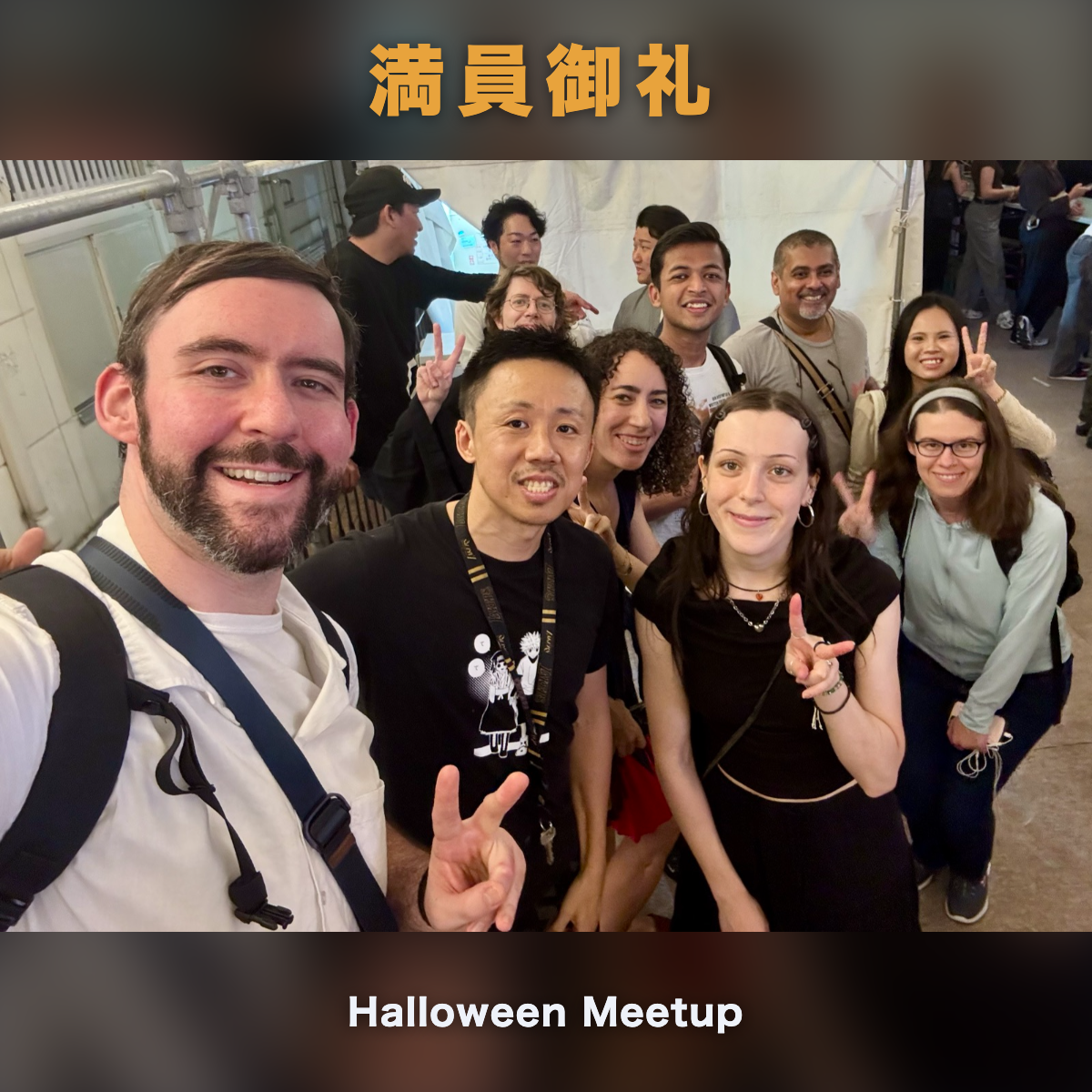
ビザは下りるし、街も覚えます。そのあとに来るのが、誰もいない土曜の夜です。福岡のミートアップはそこを埋めるために始めました。10月31日の夜はハロウィンの回です。
2026年10月29日 · 約1分で読めます
難しいのは、まざった場をまとめること
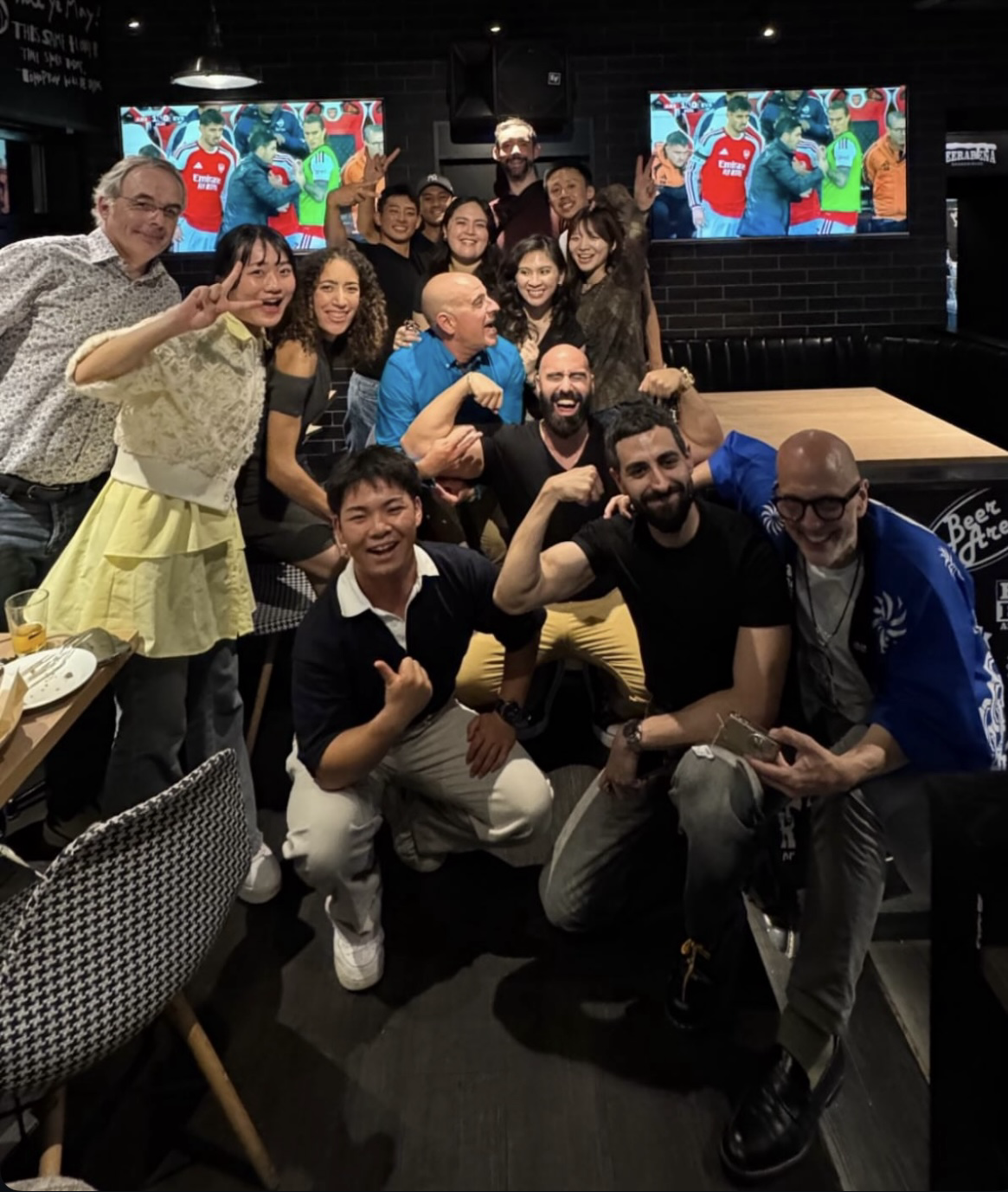
6月に始めた福岡のミートアップは、LINEのオープンチャットが125人を超え、20を超える国の人が来ています。背景の違う人をまとめるのがなぜ難しいのか、アメリカでの17年から。
2026年10月26日 · 約1分で読めます
福岡で開かれたドイツの祭りを、ドイツの人に教わった
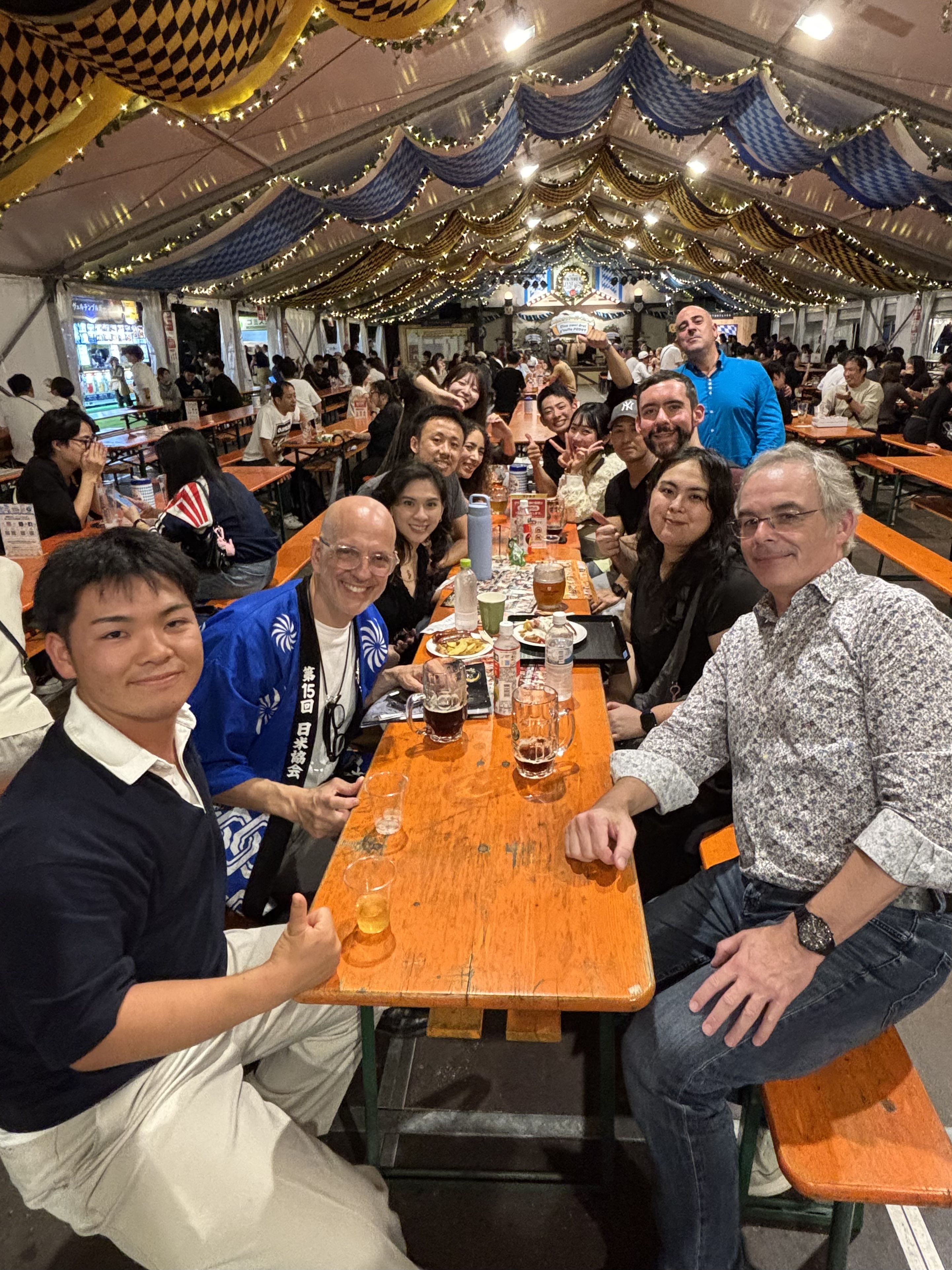
1つのテーブルに6つの国籍。福岡に住むドイツの方がオクトーバーフェストとは何かを教えてくれ、1人旅で来ていたもう1人のドイツの方も、同じテーブルに加わりました。