
2026-10-06
Three Hakata endings the textbook never taught you
教科書に無い博多の語尾3つ
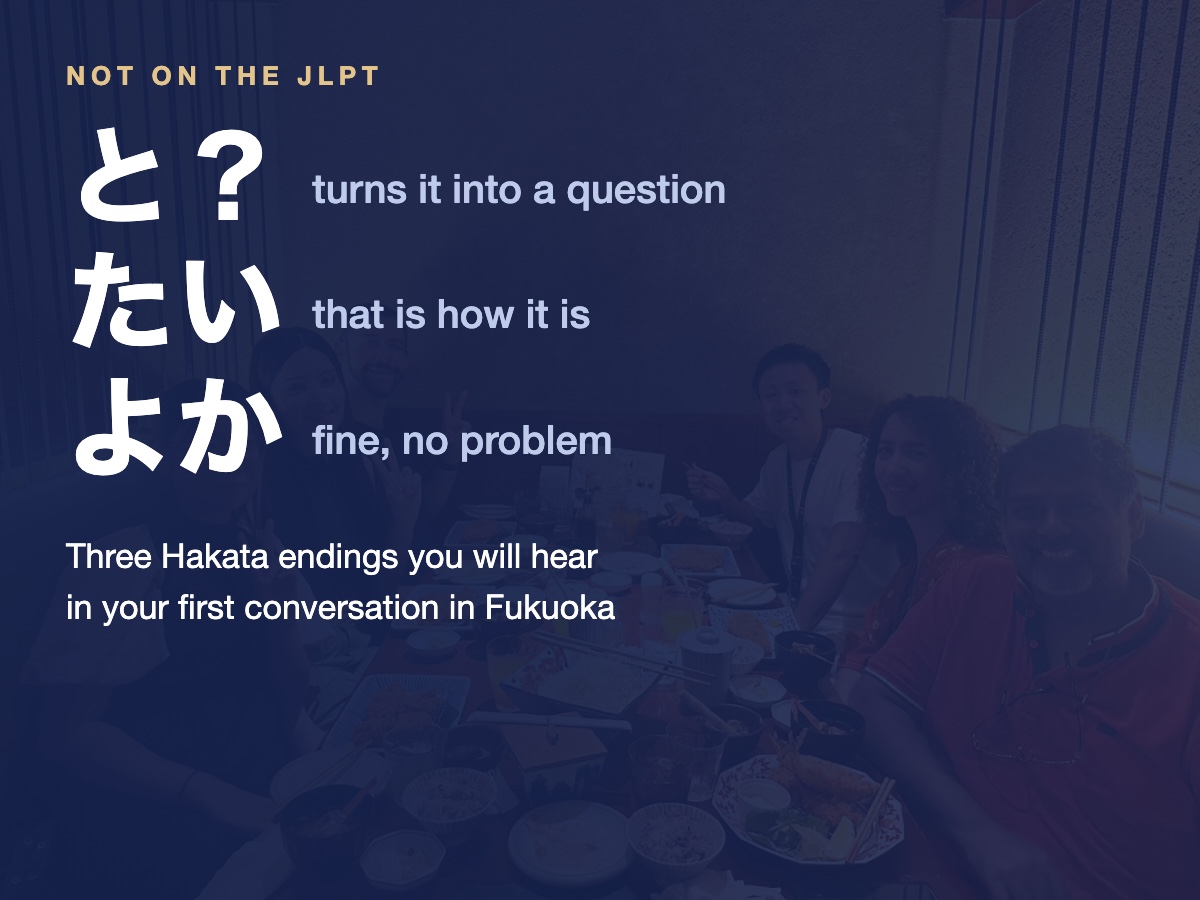
Japanese textbooks do not prepare you for the first conversation you have in Fukuoka. The grammar is right, the endings are not the ones you studied.
Three to start with.
To (と). Said at the end with the pitch going up, it turns a sentence into a question. It is doing the job that no does in standard Japanese. Nan shiyou to (なんしようと) means what are you doing. Drop the pitch instead and the same ending becomes a statement.
Tai (たい). This is the Hakata way of saying da yo, the ending you use with friends and family when you are telling them how it is. Isogashika tai (忙しかたい), I am busy.
Yoka (よか). It means ii, fine, good, no problem. Yoka yo (よかよ) is the answer when someone apologises for something small.
One thing that catches people out. Adjectives that end in i in your textbook often end in ka here, which is why busy is isogashika and good is yoka. Younger people in Fukuoka often use the textbook forms too, so you will hear both.
None of this is on the JLPT. That is the point. The test measures the Japanese that is written down. A city runs on the Japanese people actually say, and in Fukuoka that is a different set of endings.
You do not have to speak this way yourself. Hearing it and knowing what it is doing is enough, and it changes how a conversation feels, because you stop freezing on words that are not in your book.
If you are learning Japanese and planning a move, pick the city first, then learn how that city talks.
教科書は、福岡で交わす最初の会話の準備をさせてくれません。文法は合っているのに、語尾が習ったものと違うからです。
まずは3つです。
「と」。文の最後で上げて言えば疑問文になります。標準語の「の」と同じ働きです。「なんしようと?」は「何をしているの?」です。同じ語尾を下げて言えば、今度は言い切りになります。
「たい」。「〜だよ」にあたる博多の語尾です。友達や家族に、こうなんだと伝えるときに使います。「忙しかたい」で「忙しいんだよ」。
「よか」。「いい」という意味です。小さなことで謝られたときの返事は「よかよ」です。
もう1つ、戸惑うところがあります。教科書で「い」で終わる形容詞が、博多では「か」で終わります。だから「忙しか」であり、「よか」です。福岡でも若い人は教科書どおりの形を使うことが多いので、どちらも耳にします。
どれもJLPTには出ません。そこが大事なところです。試験が測るのは書かれた日本語で、街が動いているのは話される日本語です。福岡では、その語尾が違います。
自分で使えるようになる必要はありません。聞いて、何をしている言葉かが分かるだけで十分です。それだけで会話の感じが変わります。本に載っていない言葉で固まらなくなるからです。
日本語を勉強していて移住も考えているなら、先に街を選んで、それからその街の話し方を覚えてください。
Comments
No comments yet.
Log in to like, comment, and repost.