
2026-10-05
Sumimasen does four jobs, and three are not apologies
「すみません」の4つの仕事
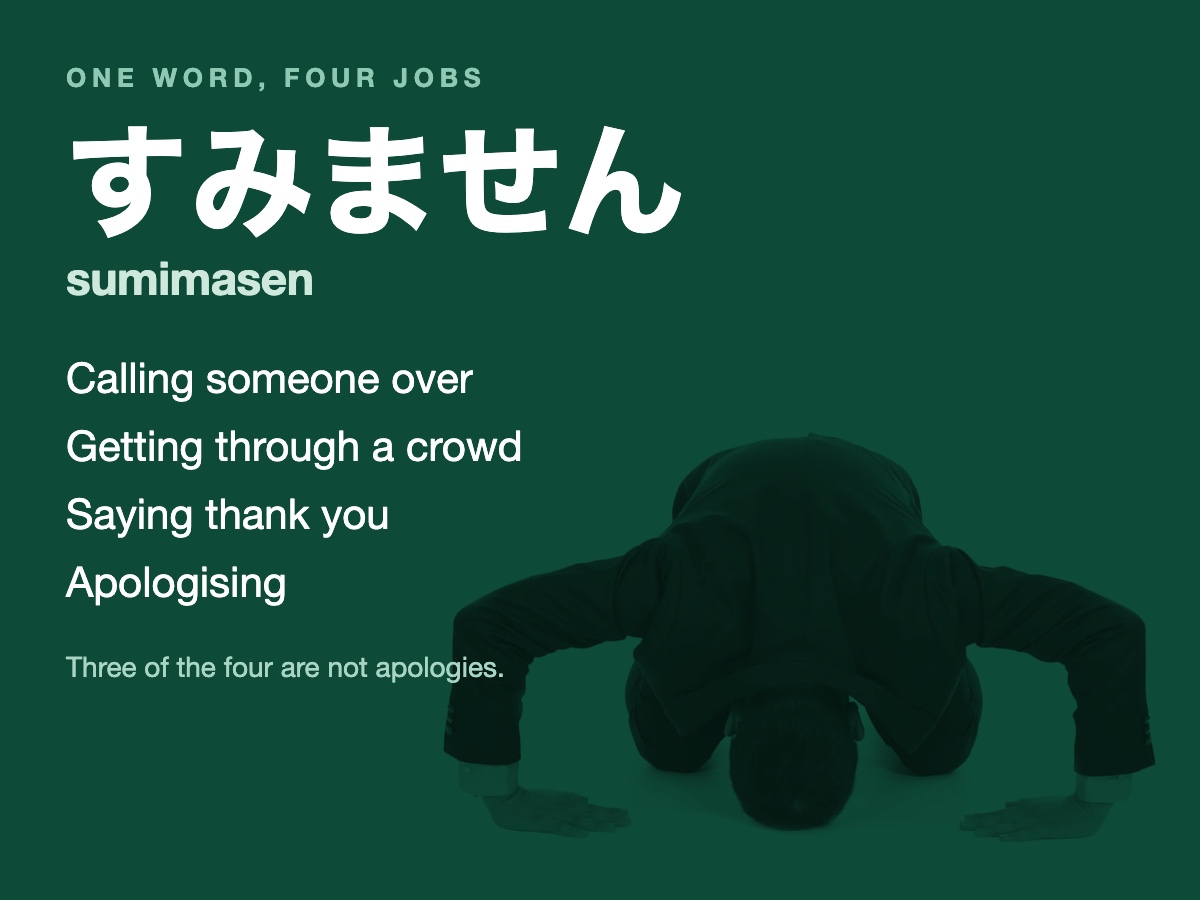
If you learn one word before you move to Japan, make it sumimasen (すみません). It does four different jobs, and three of them are not an apology.
One. It calls someone over. In a restaurant you say it out loud across the room, and that is normal, not rude. Nobody is coming until you do.
Two. It gets you through. On a packed train or a narrow aisle, sumimasen is the sentence that opens a path. You do not need the rest of the grammar.
Three. It says thank you. Someone holds a door, picks up what you dropped, moves a bag off a seat for you. Sumimasen there means I am grateful and I know I put you out. Arigatou works, but this one is what you will hear from the people around you.
Four. It apologises. The one use everybody is taught first, and the least common of the four in an ordinary day.
Here is the thing I would tell anyone starting out. On day one you cannot build sentences yet, so your Japanese has to be made of single words that carry a whole situation. Sumimasen is the strongest one in the language.
Learn how to say it to a room, not just to a person. That one adjustment is the difference between waiting twenty minutes for a server and eating.
日本に来る前に1語だけ覚えるなら、「すみません」です。この言葉は4つの仕事をしていて、そのうち3つは謝罪ではありません。
1つ目。人を呼ぶ言葉です。飲食店では部屋の向こうまで届く声で言います。失礼ではなく、それが普通です。言わない限り、誰も来ません。
2つ目。道を開ける言葉です。満員の電車でも、狭い通路でも、「すみません」で前に進めます。ほかの文法は要りません。
3つ目。お礼の言葉です。ドアを押さえてもらったとき、落とした物を拾ってもらったとき、席の荷物をどけてもらったとき。ここでの「すみません」は、ありがたいのと、手間をかけさせたという気持ちの両方です。「ありがとう」でも通じますが、周りの人から聞こえてくるのはこちらです。
4つ目。謝る言葉です。最初に習うのはこれですが、普通の1日の中では4つの中で一番出番が少ない使い方です。
これから始める人に言いたいのはここです。最初の日はまだ文を組み立てられません。だから日本語は、状況ごと背負える1語の積み重ねになります。「すみません」は、その中で一番強い1語です。
人に向かって言うだけでなく、部屋に向かって言えるようにしてください。その違いだけで、店員さんを20分待つか、ごはんにありつけるかが変わります。
Comments
No comments yet.
Log in to like, comment, and repost.