
2026-09-06
In Tokyo, easy Japanese beats English
東京では、英語よりやさしい日本語が選ばれている
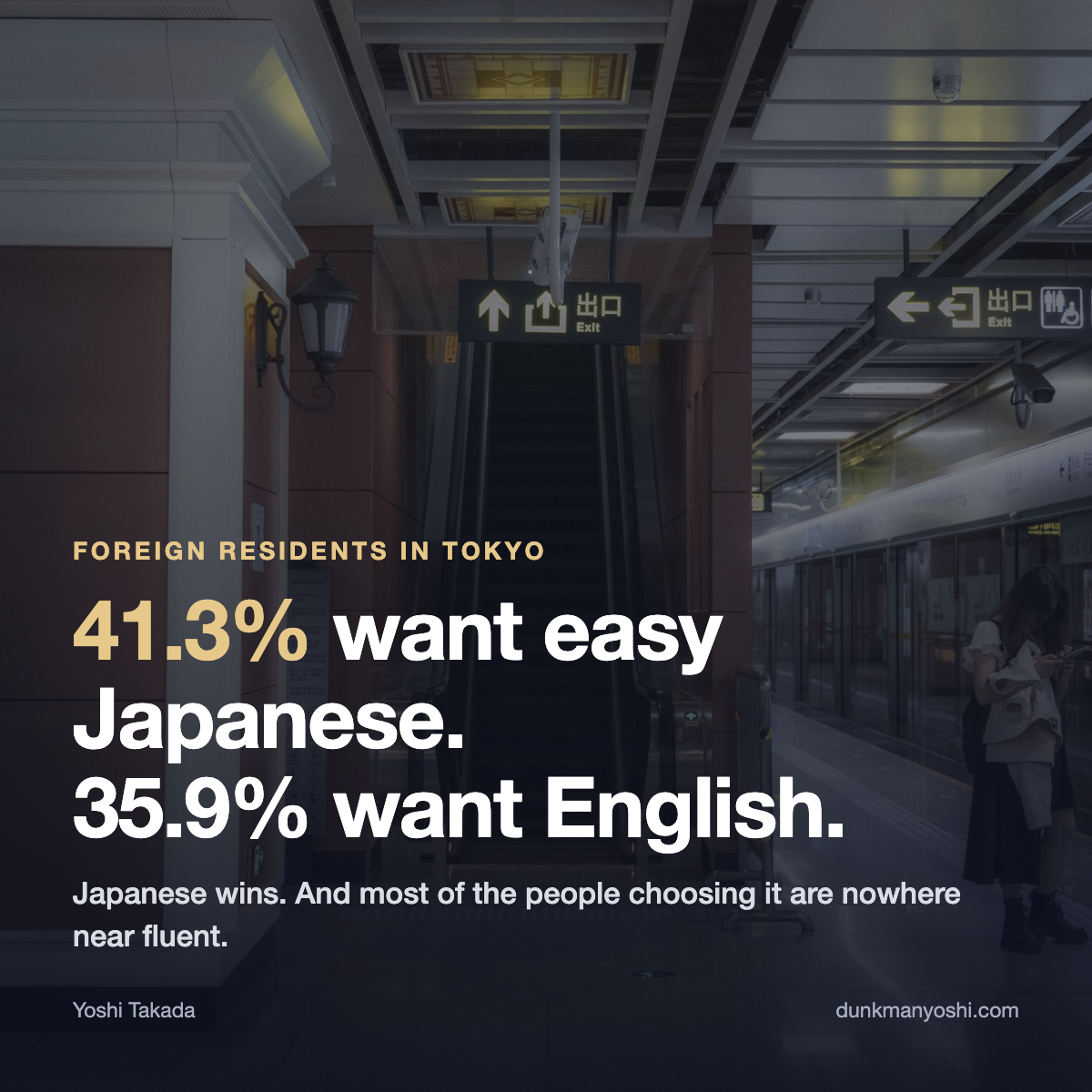
41.3% of foreign residents in Tokyo say they want their information written in easy Japanese.
35.9% say English.
Japanese wins. And most of the people choosing it are nowhere near fluent.
That comes from a survey by the Tokyo Tsunagari Sosei Foundation, and it broke an assumption I had carried for years: that the kind thing to do for a foreign resident is to switch to English.
Kumamoto is where you see why it doesn’t hold. More than half of the prefecture’s foreign residents come from Vietnam, Indonesia, and other countries where English is not the first language. Hand them English and you have moved the problem, not solved it. Officials there now say it outright: lead with easy Japanese, not English.
After July’s earthquake, a local IT company called WizTry put up a support site the next day. One line on it read:
水を くばる 場所が あります。お金は いりません。
There is a place giving out water. It costs nothing.
Short sentences. Everyday words. Spaces between the chunks so the eye can find them. No keigo, no stacked kanji, nothing decorative. Someone at N4 can read that while frightened, and frightened is exactly when they will need to read it.
Easy Japanese has limits, and I should say that. It is not a substitute for professional translation in legal or medical work, and writing it well is a real skill, not a shortcut.
What I keep coming back to is who we expect to do the work.
Almost every conversation about language in Japan puts the work on one side. The foreign resident studies harder, passes a higher level, earns the right to be understood.
Easy Japanese moves part of that work back to the person doing the talking. It costs nothing to learn, and it starts working the same afternoon.
If you lead a team here, you already have the skill. Rewriting a sentence until it lands is what you do every time you brief a client.
On your team, which side has been doing all the adapting?
東京の外国人住民に「情報をどの言語で読みたいか」と聞くと、やさしい日本語が41.3%、英語が35.9%でした。
日本語のほうが多いのです。しかも、日本語を選んだ人の多くは流暢とは程遠い人たちです。
これは東京都つながり創生財団の調査です。私はこの数字で、長く持っていた思い込みを一つ壊されました。外国人住民に親切にするというのは、英語に切り替えることだ、という思い込みです。
なぜそれが成り立たないかは、熊本を見ると分かります。熊本県の外国人住民は、半数以上がベトナムやインドネシアなど、英語が第一言語ではない国の出身です。英語で渡しても、問題は解決したのではなく、移っただけです。県の担当も今ははっきり言っています。英語ではなく、やさしい日本語を先に出す、と。
7月の地震のあと、地元のIT企業WizTryが翌日に支援サイトを立ち上げました。そこにはこう書かれていました。「水を くばる 場所が あります。お金は いりません。」
短い文。ふだん使う言葉。目が区切りを見つけられるように、意味のかたまりのあいだに空白。敬語なし、漢字の積み重ねなし、飾りなし。N4の人でも、怖い思いをしている最中に読めます。そして、怖い思いをしている最中こそ、読む必要があるときです。
公平に書いておくと、やさしい日本語にも限界があります。法律や医療の場面で専門の翻訳の代わりにはなりませんし、上手に書くのは本当に技術が要ります。近道ではありません。
それでも私が何度も戻ってくるのは、この点です。日本語をめぐる話は、ほとんどいつも片側にだけ努力を求めます。外国人住民のほうがもっと勉強し、上の級に受かり、理解される資格を得る、という形です。
やさしい日本語は、その努力の一部を話す側に戻します。学ぶのに費用はかからず、その日の午後から効きはじめます。
日本でチームを率いているなら、その技術はもう持っています。相手に届くまで文を書き直すことは、お客様に説明するたびにやっていることだからです。
実際にどう書くのかを見たい方へ。このサイトの短い読み物は、同じ考え方で書いています。日常の場面、短い文、すべての漢字にふりがな。
Comments
No comments yet.
Log in to like, comment, and repost.