
2026-10-03
Three words to get through a ramen counter in Fukuoka
福岡のラーメンのカウンターで使う3語
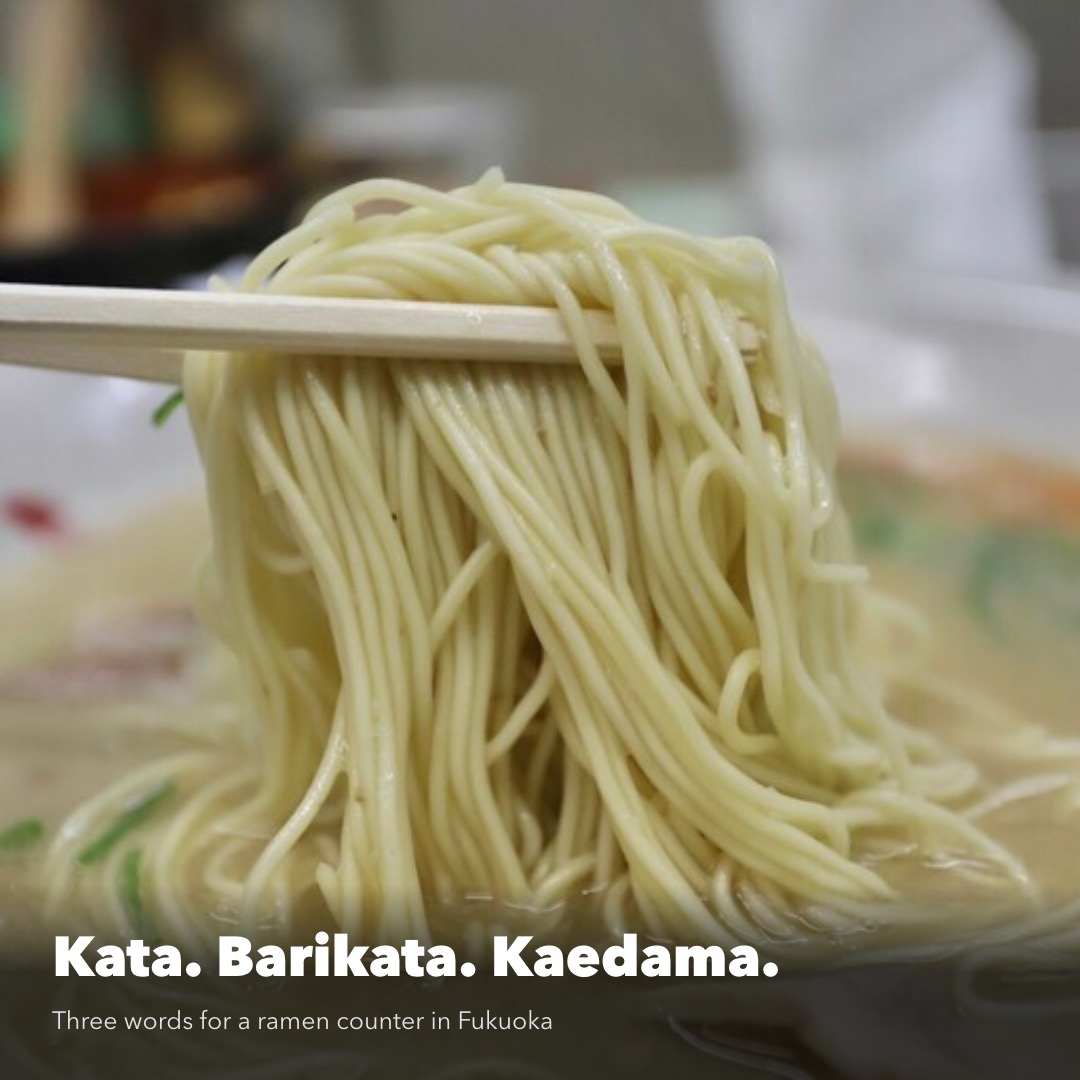
Sit down at a ramen counter in Fukuoka and you get asked a question before you have time to be nervous about it. How hard do you want the noodles?
The Hakata scale runs yawa, futsuu, kata, barikata, harigane, kona otoshi. Soft, normal, firm, very firm, wire, and barely in the water at all. Most people here order kata or barikata.
Bari is Hakata dialect for very. You will hear it all over the city in front of other words, not just noodles, so you have picked up two things at once.
Then comes kaedama. You keep some soup, say the word, and a second portion of noodles arrives for a couple of hundred yen. You can pick the firmness of that one too.
Two warnings. Not every shop recognises harigane or kona otoshi, so order what the menu actually lists. And if you ask for the hardest option on your first visit to impress the counter, you will spend the next ten minutes chewing.
So that is three words: kata, barikata, kaedama. Not a grammar point, not a JLPT item. Just enough Japanese to get through a meal the way the person next to you does it.
This is the part of learning that textbooks cannot give you. A counter, a question you can answer, and a stranger who is not grading you.
福岡でラーメンのカウンターに座ると、緊張する間もなく質問が飛んできます。麺の固さはどうしますか。
博多の段階は、やわ、普通、カタ、バリカタ、ハリガネ、粉落としです。やわらかいものから、ほとんど湯にくぐらせただけのものまで。地元では「カタ」か「バリカタ」で頼む人が多いです。
「バリ」は博多弁で「とても」という意味です。麺以外の言葉の前にも街じゅうで使われるので、ここで2つ覚えたことになります。
次が「替え玉」です。スープを少し残して、この一言を言えば、2杯目の麺が数百円で出てきます。その固さも選べます。
注意が2つあります。ハリガネや粉落としは通じない店もあるので、メニューに書いてあるものから頼んでください。そして初回に一番固いものを頼むと、そのあと10分ほど噛み続けることになります。
覚えるのは3語です。カタ、バリカタ、替え玉。文法でもJLPTの項目でもありません。隣の人と同じやり方で1杯を食べ切るための日本語です。
ここが教科書では手に入らない部分です。カウンターと、答えられる質問と、採点してこない見知らぬ人。
コメント
まだコメントはありません。
ログインすると、いいね・コメント・リポストができます。