
2026-10-01
Japanese is not a UN language, and that is worth knowing
日本語は国連の公用語ではない。そこから学べること
The United Nations has six official languages: Arabic, Chinese, English, French, Russian and Spanish. Japanese is not one of them.
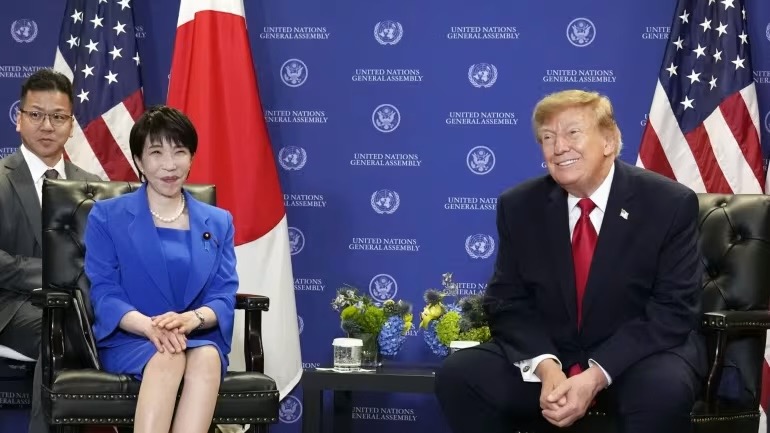
Under the General Assembly's rules, a representative may speak in another language, but then that delegation has to provide the interpretation into one of the six itself. Japan's prime minister was at the UN in New York last week, where the meeting with the US president ran a little over thirty minutes. Whenever Japan speaks in that building in Japanese, the words that reach the room arrive through an interpreter standing between two languages.
Keep that in mind the next time you apologise for your Japanese in a meeting. At the top of international politics, nobody is performing fluency. They are making sure the meaning arrives intact.
The UN's own description of the job is worth reading if you are learning a language. Its interpreters need a wide knowledge of world affairs and technical terms, and they have to cope with every imaginable accent, on top of speed and style. In that room, an accent is not a defect. It is the working condition everyone is trained for.
They also work in one direction, into their main language, with Arabic and Chinese interpreters as the exception. Even at that level, nobody is expected to be equally sharp in both directions.
There is something in that for anyone working in a second language. Your accent is not what is being judged. What is being judged is whether the meaning arrived. And the fastest way to help it arrive is the thing the professionals name as one of the hardest parts of their job: speed. Slow down, keep the sentences short, and you have done most of the work.
Put those two things side by side. A little over thirty minutes, and every sentence passing through an interpreter on the way. Nobody in that room was trying to cover everything they had ever done. They were choosing what had to survive the trip.
Your next job interview will be about that long. It is tempting to prepare by covering your whole career. In a second language, with half the clock going to the other person, that is the wrong shape. Pick the one thing you want them to remember afterwards, and make sure it survives.
That is the entire job of a language. Not your accent, not your particles. Whether the person in front of you understood you.
国際連合の公用語は6つです。アラビア語、中国語、英語、フランス語、ロシア語、スペイン語。日本語は入っていません。
国連総会の手続規則では、代表はそれ以外の言語で話してもよいことになっています。ただしその場合、6つの公用語のいずれかへの通訳は、その代表団が自分で用意します。先週、日本の首相はニューヨークの国連にいました。日本があの建物の中で日本語で話すとき、その言葉は2つの言語の間に立つ通訳を通って部屋に届きます。
会議で自分の日本語を謝りたくなったら、このことを思い出してください。国際政治の一番上の場でも、誰も流暢さを演じてはいません。意味が壊れずに届くことだけを見ています。
国連が自分たちの通訳の仕事をどう説明しているかは、語学を学ぶ人こそ読む価値があります。世界情勢と専門用語の広い知識が要り、話す速さや言い回しに加えて「あらゆる訛り」に対応しなければならない、と書かれています。あの部屋では、訛りは欠陥ではありません。全員がそれを前提に訓練されている、ただの前提条件です。
通訳は基本的に一方向、自分の母語に向けて訳します(アラビア語と中国語だけが例外で、双方向です)。あの水準でも、両方向で同じ切れ味を出すことは求められていません。
ここには、第二言語で働く人すべてに通じるものがあります。見られているのは訛りではありません。意味が届いたかどうかです。そして届けるために一番効くのは、プロが仕事の難所に挙げている「速さ」への対処です。ゆっくり話し、文を短く切る。それだけで大半は片付きます。
この2つを並べてみてください。30分あまりという時間と、どの文も通訳を通って相手に届くという条件。あの部屋にいた人は、自分のやってきたこと全部を並べようとはしていません。何を残すかを選んでいます。
次の面接も、だいたい同じ長さです。これまでの経歴を全部詰め込みたくなります。第二言語で、しかも時間の半分は相手が話すとなれば、その形は合いません。相手にあとで覚えていてほしいことを1つ選び、それが最後まで残るようにしてください。
それが言語の仕事のすべてです。発音でも助詞でもありません。目の前の人に伝わったかどうかです。
コメント
まだコメントはありません。
ログインすると、いいね・コメント・リポストができます。